1) What Are Covered-Call ETFs and How Do They Generate Income?
A covered-call ETF is an actively-managed exchange-traded fund that holds a diversified portfolio of stocks while simultaneously selling call options on those same holdings. Unlike traditional equity ETFs that rely solely on stock price appreciation, covered-call ETFs employ an options-based strategy to generate additional income through option premiums—the fees paid by option buyers for the right to purchase shares at a predetermined price.
The mechanics are straightforward: the fund buys and holds stocks in a particular index or sector (such as the S&P 500 or Nasdaq-100), then sells call options on some or all of these stocks, collecting option premiums from buyers. These premiums are typically distributed to investors on a monthly, quarterly, or weekly basis, providing a steady income stream. This approach appeals particularly to income-focused investors seeking higher yields compared to traditional equity ETFs, especially in environments where savings accounts and bonds offer lower returns.
2) The Core Mechanics: Understanding Strike Prices and Premium Collection

To understand how covered-call ETFs generate income, you need to grasp two key concepts: the strike price and the premium. The strike price is the predetermined price at which the option buyer has the right to purchase the underlying stock. When the ETF sells a call option, it receives an immediate payment—the premium—from the option buyer. This premium represents the buyer’s payment for the right (but not the obligation) to purchase the stock at the strike price before the option expires.
The ETF’s income generation follows a predictable pattern: if the stock price remains below the strike price when the option expires, the option expires worthless, the ETF retains the stock, and keeps the premium as profit. The fund can then write another call option at a future date, collecting additional premiums. However, if the stock price rises above the strike price, the ETF is obligated to sell the stock at that predetermined price, capping potential gains regardless of how high the stock actually climbs.
Many covered-call ETFs employ a specific tactical approach: they write short-term call options (typically expiring in under two months) that are out-of-the-money, meaning the stock price is currently below the strike price. This strategy balances earning relatively high premium payments while increasing the odds that contracts will expire worthless—a positive outcome for the fund manager. Some advanced covered-call ETFs even use 0DTE (zero days to expiration) options, which expire on the same day they are written, allowing the fund to capture premium income immediately while limiting duration of risk exposure.
3) Primary Benefits: Income Generation and Volatility Reduction
The most obvious advantage of covered-call ETFs is their ability to generate consistent income. By collecting option premiums regularly, these funds provide investors with a steady income stream that can be particularly attractive when traditional fixed-income investments offer lower yields. This income can support retirement planning and provide cash flow without requiring investors to sell shares or participate directly in options trading themselves.
Beyond income generation, covered-call ETFs offer a secondary benefit: reduced portfolio volatility. The income from premiums can offset losses if underlying stock prices decline, providing a cushion during market downturns. This volatility reduction makes covered-call ETFs particularly suitable for sideways or moderately bullish markets, where high volatility can enhance option premiums without significantly limiting potential returns. Additionally, by investing in a covered-call ETF, investors gain exposure to covered-call strategies without directly participating in options trading on their own—the fund manager handles all the complexity.
4) The Hidden Trade-Off: Limited Upside Potential During Market Rallies
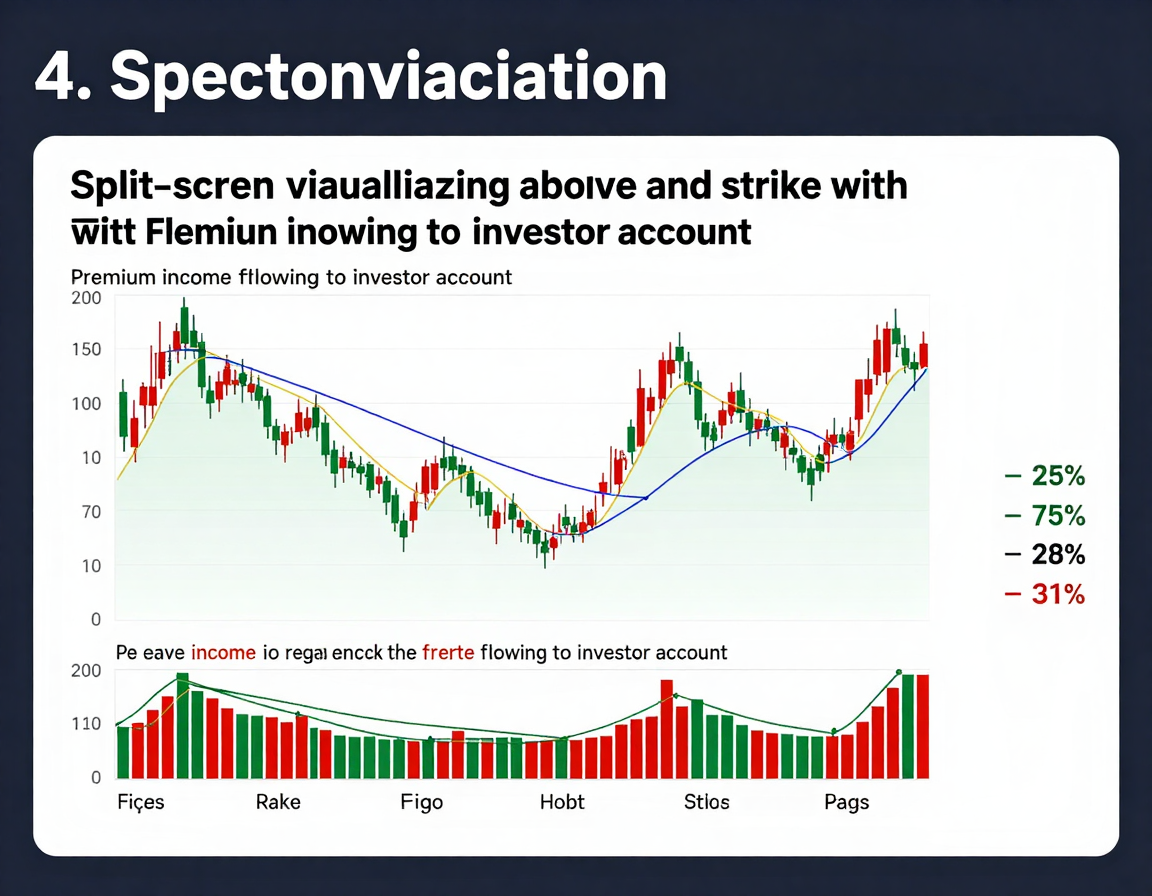
The fundamental trade-off of covered-call ETFs becomes apparent during strong market rallies. When you sell a call option, you give up the opportunity to benefit from price increases in the underlying stock above the strike price. This means that if a stock in the fund’s portfolio surges significantly, the ETF must sell those shares at the predetermined strike price, capping your gains regardless of how high the stock actually climbs.
Consider a practical scenario: if a covered-call ETF holds a stock trading at $100 and sells a call option with a $110 strike price, collecting a $3 premium, the maximum profit on that position is $13 per share ($10 gain from the strike price plus $3 premium), even if the stock rises to $150. A traditional equity ETF holding the same stock would capture the full $50 gain. This upside limitation becomes increasingly painful during extended bull markets or when individual holdings experience exceptional growth.
In volatile markets specifically, this trade-off intensifies. Higher volatility increases option premiums, making the strategy more lucrative in the short term, but it also increases the probability of sharp rallies that trigger early assignment of call options, forcing the sale of appreciated positions at predetermined prices. Investors pursuing covered-call ETFs must accept that they are explicitly trading growth potential for income stability.
5) Performance Across Different Market Conditions
Covered-call ETF performance varies dramatically depending on market direction. In moderate upward moves—when stock prices rise but remain within a reasonable range—covered-call ETFs perform well. The premium income supplements modest capital gains, and the strategy delivers attractive total returns. This is the ideal environment for these funds.
However, in large upward moves, covered-call ETFs significantly underperform traditional equity ETFs. When stocks surge substantially above the strike price, the fund must sell shares at the predetermined price, missing the bulk of the gains. This performance drag can be substantial during bull markets or when individual holdings experience exceptional growth.
In downward moves, covered-call ETFs provide some protection through premium income, but this protection is limited. The premiums received from selling options may not be sufficient to offset losses sustained from underlying stock price declines. While the income cushion helps, it does not eliminate downside risk—investors continue to bear the full risk of underlying stock price declines. In severe market downturns, covered-call ETFs still experience significant losses, though the premium income provides modest mitigation.
6) Evaluating Covered-Call ETFs for Your Investment Strategy

Determining whether covered-call ETFs fit your portfolio requires honest assessment of your investment goals and market outlook. These funds are most appropriate for investors who prioritize current income over capital appreciation, have a neutral to moderately bullish outlook, and can accept capped upside potential. They work particularly well for investors in or near retirement who need steady cash flow and can tolerate reduced growth potential.
Consider your market expectations carefully. If you believe the market will experience strong sustained growth, traditional equity ETFs will likely outperform covered-call ETFs significantly. If you expect sideways or modest upward movement, covered-call ETFs become more attractive. Your risk tolerance also matters: covered-call ETFs reduce volatility through premium income, making them suitable for conservative investors, but they do not eliminate downside risk.
Evaluate the specific covered-call ETF’s approach to option writing. Some funds write options further out-of-the-money (higher strike prices), capturing lower premiums but preserving more upside potential. Others write options closer to current prices, generating higher premiums but capping gains more aggressively. Understanding this tactical choice helps you select a fund aligned with your preferences. Additionally, consider the underlying holdings: a covered-call ETF tracking the S&P 500 provides different risk-return characteristics than one focused on a specific sector or growth stocks.
How to Apply This in Practice
Step 1: Assess Your Income Needs Determine how much current income you require from your portfolio. If you need substantial regular distributions and can accept limited growth, covered-call ETFs may be appropriate. If you prioritize long-term capital appreciation, they likely are not.
Step 2: Evaluate Your Market Outlook Consider your expectations for market direction over the next 12-24 months. Covered-call ETFs perform best in neutral to moderately bullish environments. If you expect strong bull markets, traditional equity ETFs will likely serve you better.
Step 3: Compare to Alternatives Evaluate covered-call ETFs against other income-generating strategies: dividend-focused ETFs, bond funds, preferred stock ETFs, or a combination of traditional equity ETFs with a separate covered-call strategy on a portion of your portfolio. Each approach has different risk-return characteristics.
Step 4: Understand the Specific Fund’s Strategy Review the prospectus of any covered-call ETF you consider. Understand how far out-of-the-money the options are written, how frequently options are rolled, and what the historical premium income has been. Different funds execute the strategy differently.
Step 5: Position Sizing If you decide covered-call ETFs fit your strategy, consider using them as a portion of your portfolio rather than your entire equity allocation. This allows you to capture income benefits while maintaining exposure to traditional equity growth through other holdings.
Step 6: Monitor Regularly Track the fund’s performance relative to its underlying index and to traditional equity ETFs. Pay attention to how much of the fund’s return comes from premiums versus capital appreciation. This helps you assess whether the strategy is delivering the income-to-growth trade-off you expected.
Risk Note
Covered-call ETFs involve significant trade-offs that investors must understand before investing. The primary risk is capped upside potential: during strong market rallies, these funds will significantly underperform traditional equity ETFs because they must sell appreciated shares at predetermined strike prices. This is not a theoretical risk—it occurs regularly during bull markets and can result in substantial opportunity costs over time.
Additionally, covered-call ETFs do not provide meaningful downside protection. While premium income provides a modest cushion during market declines, it is typically insufficient to offset substantial losses. Investors continue to bear full downside risk while accepting limited upside potential—an asymmetric risk-return profile that may not suit all investors.
The income generated by covered-call ETFs also depends heavily on market volatility and option pricing. In low-volatility environments, premiums decline, reducing income generation. Furthermore, the tax efficiency of covered-call ETFs may be lower than traditional equity ETFs due to frequent option assignment and potential short-term capital gains distributions.
Before investing in covered-call ETFs, ensure you fully understand these trade-offs and that they align with your specific financial goals, time horizon, and risk tolerance. Consider consulting with a financial advisor to determine whether covered-call ETFs are appropriate for your particular situation.