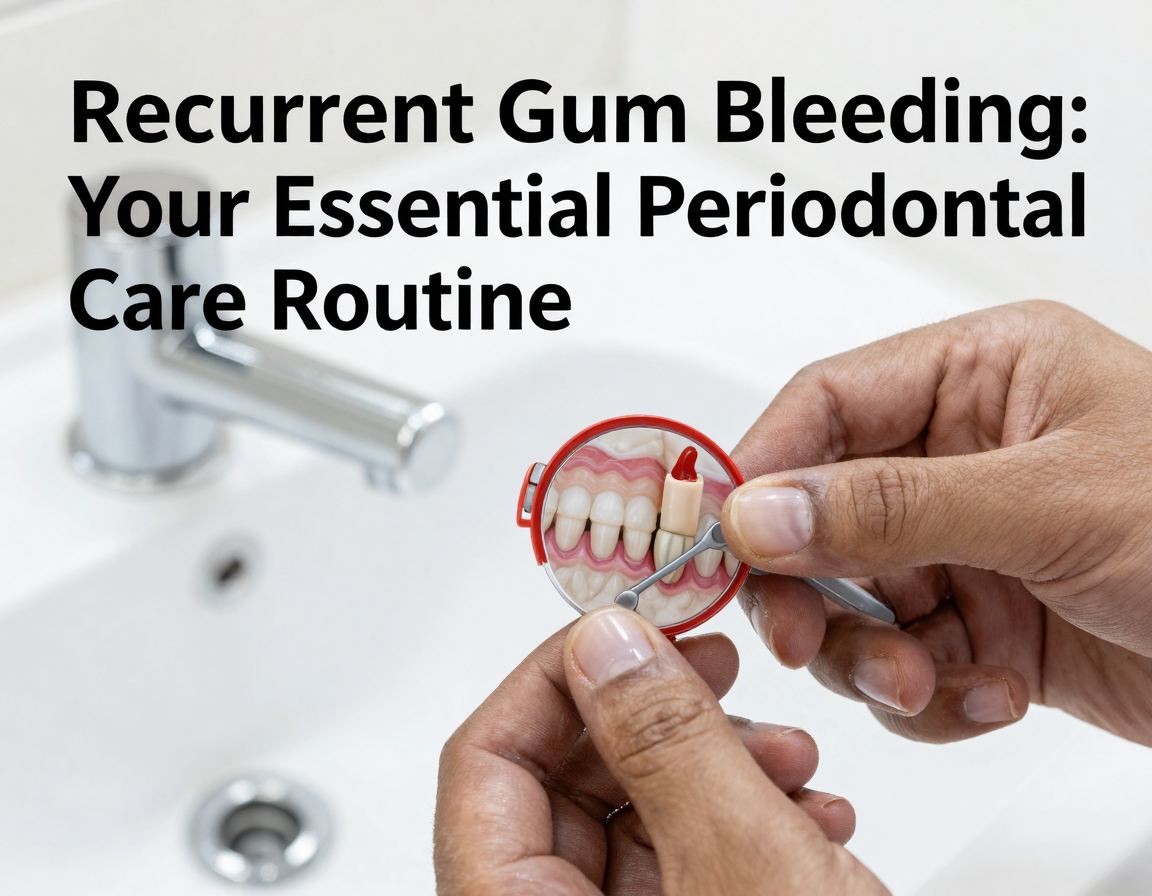
Recurrent gum bleeding is a common warning sign of gingivitis or early periodontal disease, often caused by plaque buildup and bacterial inflammation. Ignoring it can lead to periodontitis, bone loss, and tooth mobility, but a consistent periodontal care routine can effectively halt progression and promote healing.
1) Understanding Recurrent Gum Bleeding
Gum bleeding during brushing, flossing, or eating signals inflammation from bacteria in plaque and tartar. Plaque hardens into tartar within days, harboring pathogens like Porphyromonas gingivalis that trigger redness, swelling, and bleeding. Studies link low vitamin C levels to increased gum bleeding risk, as it helps reduce inflammation. Early intervention prevents advancement to periodontitis, where deep pockets form around teeth, making cleaning impossible without professional help.
2) Master Proper Brushing Techniques

Brush three times daily for at least three minutes, using a soft-bristled toothbrush angled at 45 degrees toward the gumline. Sweep from gum to tooth in short strokes to remove plaque without traumatizing gums. Replace your toothbrush every three months or sooner if bristles fray, as worn brushes fail to clean effectively. Proper technique dislodges food debris and bacteria, reducing bleeding over time even if initial sessions cause minor spotting.
3) Incorporate Flossing and Interdental Cleaning
Floss daily to clean between teeth where brushes can’t reach. Use 18 inches of floss, wrap around fingers, and gently slide between teeth in a C-shape, rubbing up and down 5-6 times per side. For wider gaps, use interdental brushes: insert gently, move up and down multiple times per space. Bleeding may occur initially due to inflammation but continues use promotes gum health; stop if persistent and consult a dentist.
4) Professional Scaling and Cleanings

Schedule scaling every 6-12 months to remove tartar with ultrasonic tools, preventing bacterial buildup. Even inflamed gums may bleed during the procedure, but inflammation subsides afterward, reducing recurrent bleeding long-term. Those with periodontal history need cleanings every 3-6 months to avoid relapse. This is the most effective way to address root causes beyond home care.
5) Supportive Aids: Mouthwashes and Nutrition
Use 0.1-0.2% chlorhexidine mouthwash (15mL, gargle 30-60 seconds, twice daily) for short-term bacterial control, but limit to under 10 days to avoid staining or side effects. Increase vitamin C intake via foods or supplements to lower inflammation, as research on over 9,000 people shows deficiency correlates with gum bleeding. Maintain balanced diet for gum-supporting nutrients.
6) Build Long-Term Habits and Monitoring

Combine routines: brush, floss/interdental clean, rinse if needed. Track progress by noting reduced bleeding after 1-2 weeks. Visit dentist if bleeding persists beyond two weeks or accompanies pain/swelling. Implants require same vigilance, using water jets for hard-to-reach areas. Consistency prevents progression to advanced disease requiring surgery.
How to Apply This in Practice
Daily Periodontal Care Checklist:
- Brush 3x/day for 3+ minutes with soft toothbrush at 45° angle.
- Floss or use interdental brush once daily, gently but thoroughly.
- Gargle with chlorhexidine (if prescribed) 2x/day for max 10 days.
- Eat vitamin C-rich foods: citrus, berries, peppers.
- Schedule scaling: every 6 months if at risk, annually otherwise.
- Replace toothbrush every 3 months.
- Monitor: Note bleeding frequency; dentist if no improvement in 2 weeks.
Follow this checklist morning and night for optimal results. Adjust interdental tools to fit your gaps.
Risk Note
Persistent bleeding despite routine may indicate advanced periodontitis, systemic issues, or anticoagulant use—consult a dentist immediately to avoid bone loss or tooth extraction. Self-treatment doesn’t replace professional diagnosis; chlorhexidine overuse risks staining and acidity.