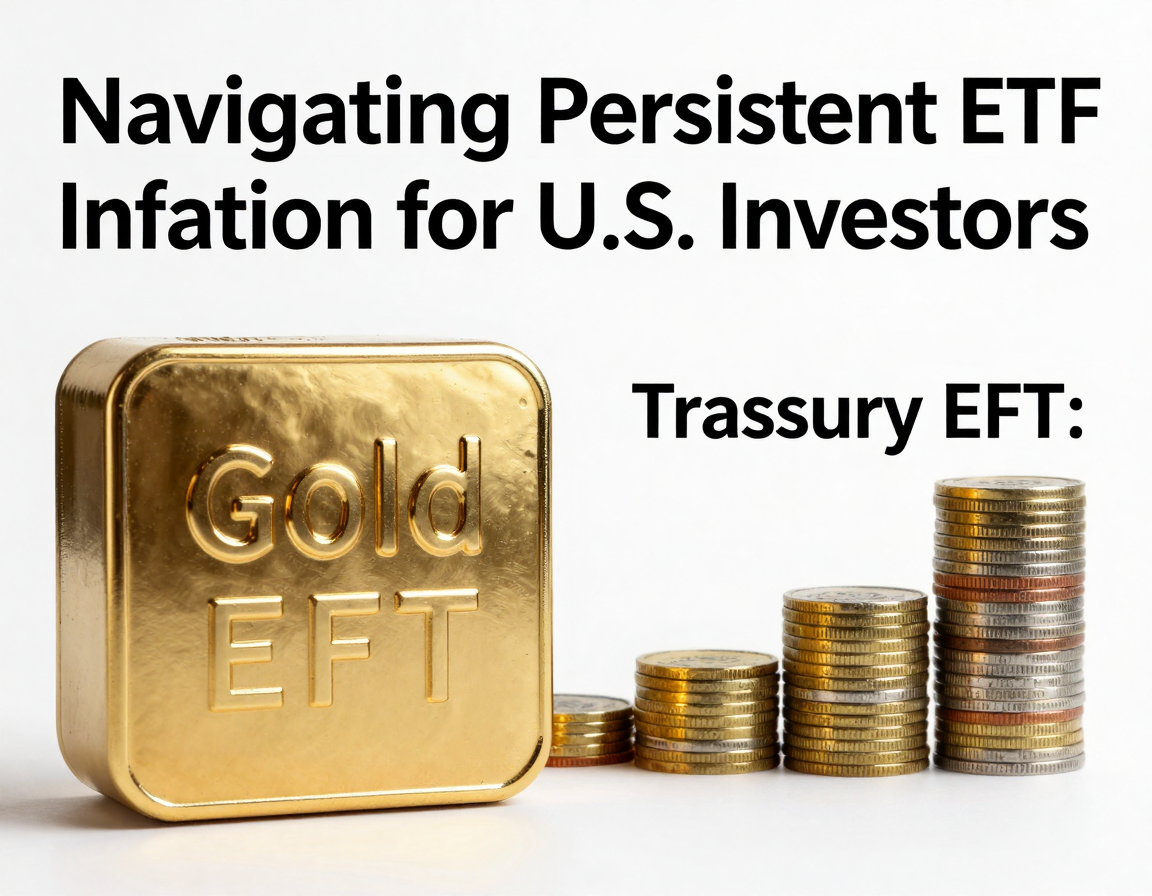
In periods of persistent inflation, Gold ETFs often outperform as a hedge against rising prices, while Treasury ETFs like those tracking TIPS excel in stability but suffer when inflation accelerates due to rising interest rates.
1)
Persistent inflation phases, characterized by accelerating consumer price increases, challenge traditional portfolios. Historical data shows gold prices rise with inflation expectations, acting as a store of value, whereas Treasury bonds face downward pressure from higher yields. Research confirms that inflation’s rate of change—not just its level—drives asset performance: accelerating inflation favors gold, while decelerating inflation benefits Treasuries.
U.S. investors turn to ETFs for accessible exposure. Gold ETFs like GLD track physical gold, offering liquidity without storage issues. Treasury ETFs such as IEF (7-10 year notes) or TIP (TIPS) provide inflation-adjusted returns backed by the U.S. government.
2)
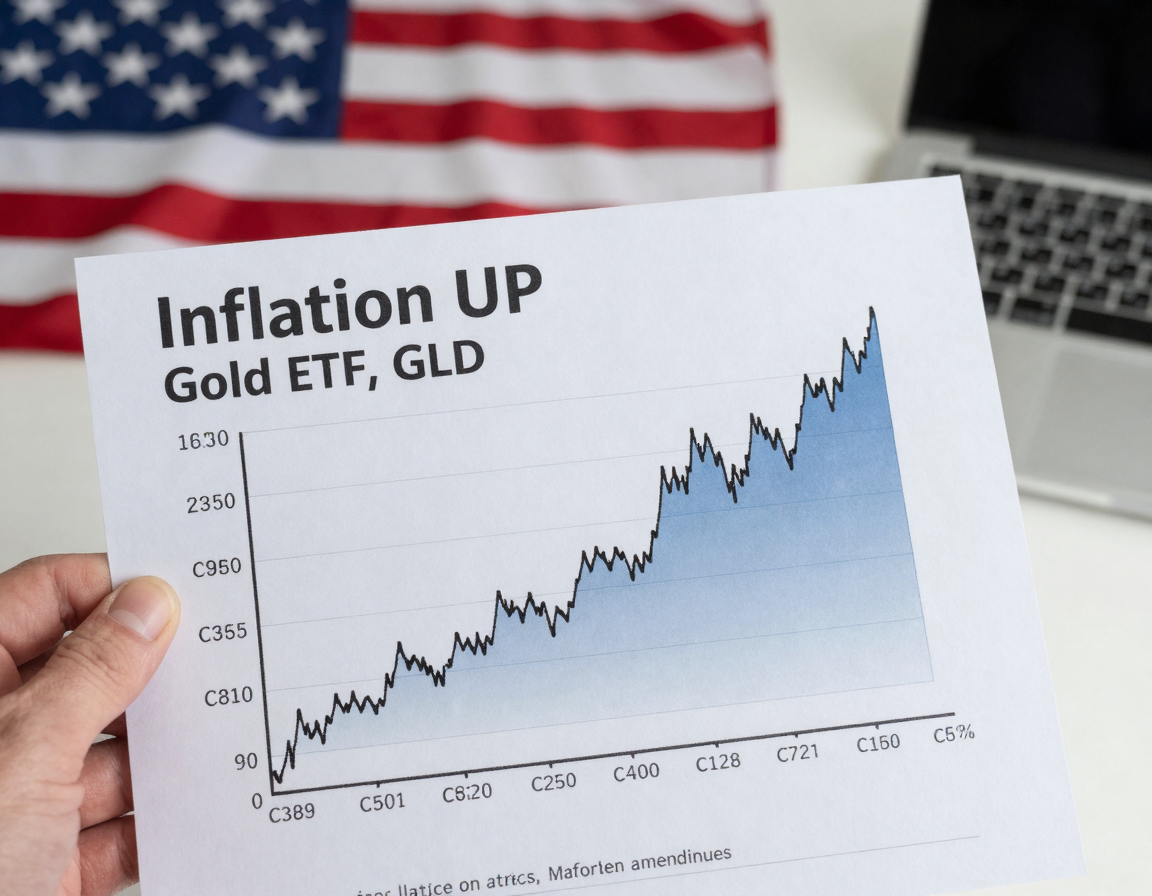
Gold ETFs have long been viewed as an inflation hedge, appreciating when the dollar weakens and purchasing power erodes. Studies, including Barsky et al. (2021), highlight gold’s positive response to rising inflation expectations. In ‘inflation UP’ regimes—where inflation accelerates—GLD shows strong performance, especially with positive momentum.
Benefits include protection against currency devaluation and economic uncertainty. Unlike physical gold, ETFs avoid storage costs and volatility management challenges, with over $150 billion in U.S. gold ETF holdings driving prices via financial demand. However, gold’s volatility requires patience, as investors often buy near peaks.
3)
Treasury ETFs, particularly those holding TIPS, adjust principal and interest for inflation via CPI indexing, safeguarding real returns. In ‘inflation DOWN’ regimes, intermediate Treasury ETFs like IEF or long-term TLT deliver positive performance as yields fall.
Advantages encompass government backing, predictable income, and lower volatility than gold. TIPS guarantee a real rate of return, making them ideal for capital preservation. Yet, in persistent high inflation, rising rates inversely impact bond prices, leading to potential losses.
4)
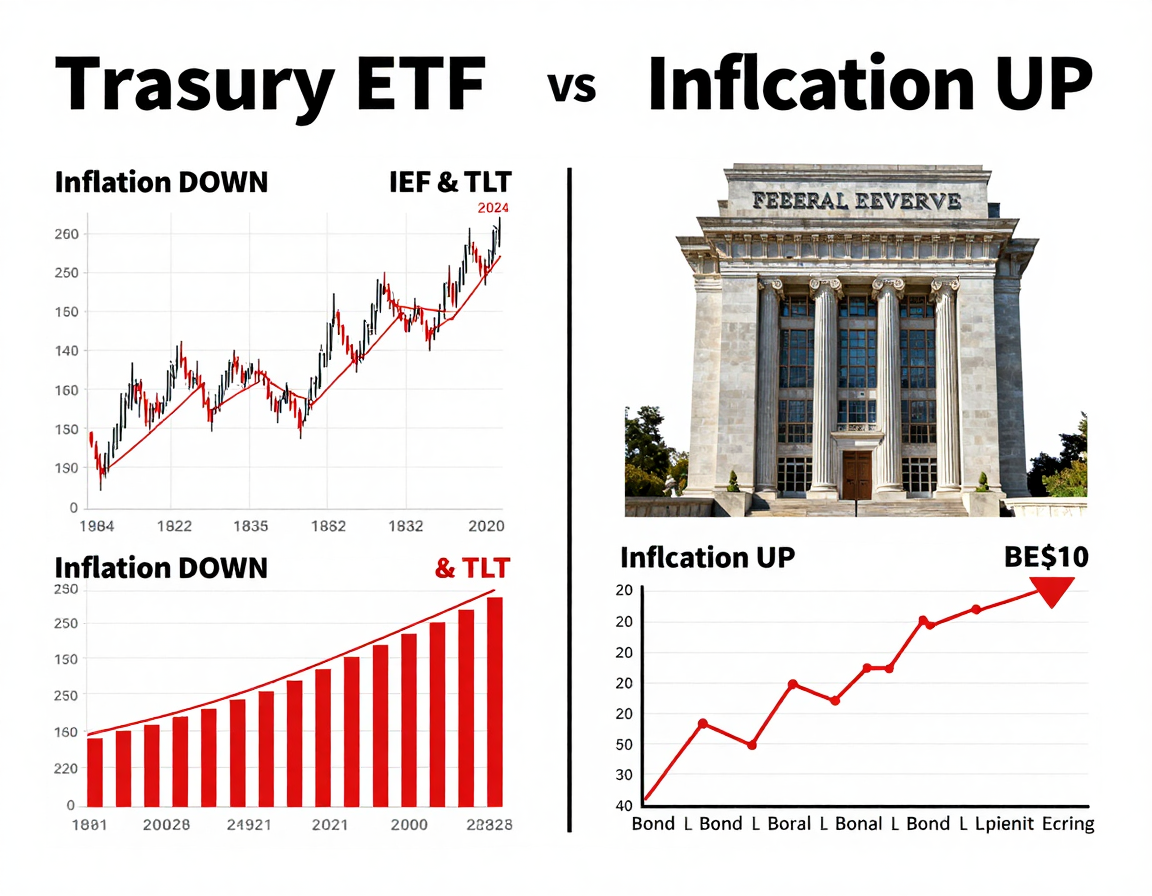
Direct comparison reveals regime-dependent superiority. In accelerating inflation, gold outperforms Treasuries: strategies holding GLD in ‘inflation UP, trend UP’ yield higher returns than buy-and-hold benchmarks. Conversely, decelerating inflation boosts Treasury ETFs, with IEF shining when momentum aligns.
Quantitative backtests show tactical strategies using inflation data—buying gold on UP trends, Treasuries on DOWN—outperform equal-weight GLD/IEF portfolios. Metrics include superior Sharpe ratios (e.g., >0.65 benchmark), lower drawdowns, and better Calmar ratios. Gold offers upside in uncertainty; Treasuries provide stability but lag in high-inflation surges.
5)
During persistent inflation—sustained acceleration—Gold ETFs edge out due to central bank rate hikes pressuring bonds. Literature notes higher inflation leads to lower bond prices via yield increases. A February 2026 analysis highlighted international TIPS ETFs like WIP at 17.92% trailing returns, yet U.S. TIP lagged gold in similar conditions.
Systematic models confirm: switch to gold when inflation rises and momentum is positive; hold Treasuries otherwise. This beats static allocations, enhancing risk-adjusted returns amid volatility.
6)

Both asset classes carry trade-offs. Gold ETFs face price swings and no yield, with mixed returns in some inflationary periods. Treasury ETFs yield less than corporates and trigger taxes on coupons, underperforming in rate-hike environments. Hybrid strategies mitigate this by timing based on inflation signals.
For U.S. investors, ETFs lower barriers: GLD for gold, TIP/IEF for Treasuries. Research favors dynamic allocation over static holds for superior performance.
How to Apply This in Practice
- Monitor CPI or PPI monthly releases to detect inflation acceleration (UP) or deceleration (DOWN).
- Check momentum: Buy GLD if inflation UP and gold trend positive; IEF/TLT if inflation DOWN and bond momentum positive; cash otherwise.
- Allocate 50/50 initially, rebalance quarterly based on regimes for better Sharpe ratios.
- Use low-cost ETFs: GLD for gold, TIP for TIPS, IEF for intermediates.
- Limit exposure to 10-20% of portfolio to manage volatility.
- Backtest with tools like Portfolio Visualizer, confirming outperformance vs. benchmarks.
Risk Note
All investments involve risk, including loss of principal. Past performance does not guarantee future results. Gold ETFs can be volatile; Treasury ETFs face interest rate and inflation risks. Strategies based on inflation data may fail if regimes shift unexpectedly due to policy changes. Consult a financial advisor; this is not personalized advice.