1) Understanding the Election Cycle’s Market Impact
U.S. presidential elections create measurable patterns in stock market behavior that extend far beyond election day itself. Historical analysis spanning nearly a century reveals that the election cycle influences not only overall market returns but also how different sectors perform relative to one another. This phenomenon, driven by shifts in political uncertainty and policy expectations, presents both challenges and opportunities for investors who understand its mechanics.
The relationship between elections and markets is not random. Rather, it reflects how investors anticipate policy changes, assess economic conditions, and adjust their risk exposure based on political outcomes. For sector-focused investors and those managing risk assets, recognizing these patterns can inform strategic allocation decisions throughout the four-year presidential cycle.
2) Pre-Election Volatility and Sector Divergence

The months leading up to a U.S. presidential election exhibit significantly elevated market volatility compared to non-election periods. Research shows that cross-sector effects in the S&P 500 were greater than average in 71% of presidential election Novembers, compared to just 47% of non-election Novembers and 44% of other months. This heightened volatility peaks in the one to three months immediately before voting day.
During this pre-election phase, different sectors respond differently to political uncertainty. Sectors sensitive to regulatory policy—such as healthcare, financials, and energy—tend to experience larger price swings as investors reassess the likelihood of policy changes under a potential new administration. Meanwhile, sectors perceived as more defensive or less dependent on specific policy outcomes may see relatively more stable performance. This divergence creates opportunities for tactical sector rotation, but it also increases the risk of concentrated bets on policy outcomes that may not materialize as expected.
The elevated pre-election volatility also coincides with lower average returns in the pre-election period. Investors facing uncertainty tend to demand higher risk premiums, which can suppress valuations across risk assets. This dynamic has historically made the months immediately before elections a challenging period for growth-oriented portfolios.
3) Post-Election Relief and Return Patterns
One of the most consistent patterns in election-year market behavior is the sharp decline in volatility immediately following election day. Once the political outcome is determined, the uncertainty that drove pre-election volatility dissipates, and markets typically experience a relief rally. Historical data from the past 11 election cycles beginning in 1980 shows that the 3-month period following U.S. elections has seen higher average returns compared to the 3-month pre-election period.
This post-election bounce reflects reduced political uncertainty combined with market optimism about potential new policies and their economic impact. Investors, with their forward-looking perspective, tend to react positively to the prospect of fresh fiscal measures—whether in tax reform, infrastructure investments, or financial deregulation. The first year of a new presidency has often been a period of stronger-than-usual returns, standing out within the broader four-year presidential cycle.
For risk assets specifically, this post-election period often brings renewed investor confidence, particularly in U.S. large-cap stocks, which typically experience a noticeable uptick. However, this optimism must be tempered by economic realities: more than half (54%) of the 12-month periods following presidential elections have overlapped with official U.S. recessions, a rate meaningfully higher than other years in a president’s term. This suggests that while sentiment improves after elections, underlying economic conditions may not always support sustained gains.
4) Sector-Specific Responses to Election Outcomes
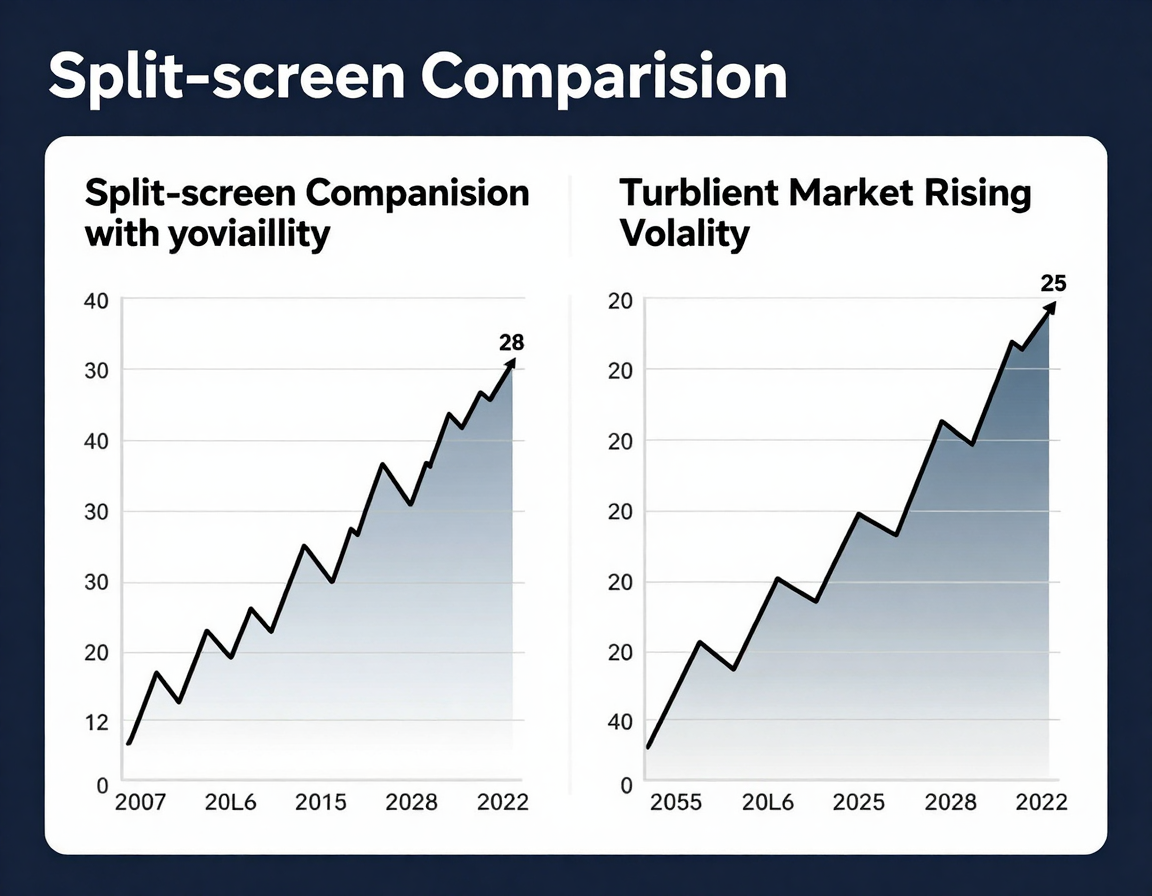
Different sectors respond distinctly depending on which party wins the presidency and the composition of Congress. When the incumbent party retains the White House, volatility tends to decline before the election and ticks up modestly afterward, reflecting continuity in policy expectations. Conversely, when the incumbent party loses, volatility increases significantly in the periods before the vote and then recedes afterward, suggesting that markets price in the uncertainty of potential policy shifts.
Congressional composition also matters significantly. The stock market historically has done better in the years after a presidential election when Congress was either fully controlled by the president’s party or divided. The market performs worse when the opposition controls both houses of Congress, likely because unified opposition makes it less probable that Congress will pass economic measures supporting the president. However, even in these less-than-ideal scenarios, the S&P 500 has historically posted double-digit returns, though typically lower than in other configurations.
Specific sectors show varying sensitivity to these political outcomes. Sectors dependent on regulatory approval or government spending—such as defense, healthcare, and infrastructure-related industries—may experience larger swings based on which party controls policy levers. Financial services, energy, and technology sectors also show meaningful sensitivity to election outcomes due to differing policy approaches to regulation, taxation, and trade. Understanding these sector-specific dynamics allows investors to position their portfolios more strategically around election cycles.
5) The Four-Year Presidential Cycle and Long-Term Returns
While individual election years show modestly lower average returns compared to non-election years, the broader four-year presidential cycle reveals important patterns. Average and median total returns for the S&P 500 have been modestly lower in presidential election years relative to other years. However, this underperformance is not uniform across the cycle.
The first year following a presidential election typically delivers the strongest returns within the four-year cycle, driven by the combination of reduced political uncertainty and market anticipation of new economic policies. Subsequent years show more variable performance, influenced by how well the new administration’s policies perform economically and how market sentiment evolves as the next election cycle approaches.
For investors managing risk assets, this pattern suggests that the post-election period—particularly the first year of a new presidency—may offer attractive entry points for growth-oriented positions, while the pre-election period may warrant more defensive positioning. However, this should not be interpreted as a rigid market-timing strategy; rather, it provides context for understanding why volatility and sector performance may shift predictably around elections.
6) Policy Uncertainty and Risk Asset Allocation
The relationship between elections and market performance is fundamentally driven by policy uncertainty. When investors face uncertainty about future tax policy, regulatory frameworks, trade relationships, or government spending, they adjust their risk exposure accordingly. Risk assets—including equities, particularly growth stocks and cyclical sectors—tend to underperform during periods of high policy uncertainty and outperform when uncertainty declines.
However, it is important to recognize that monetary policy and global events often play a larger role in shaping market outcomes than the presidency itself. The Federal Reserve’s interest rate decisions, inflation trends, and international economic conditions can overwhelm the effects of election-driven policy uncertainty. Similarly, unexpected geopolitical events or economic shocks can render election-based market patterns irrelevant in the short term.
For investors allocating to risk assets around election cycles, the key insight is that political uncertainty creates a temporary risk premium. This premium tends to be highest in the months immediately before elections and dissipates rapidly after the outcome is known. Sophisticated investors may use this pattern to inform their tactical allocation decisions—reducing risk exposure before elections when uncertainty is highest and increasing it afterward when uncertainty declines—while maintaining a long-term strategic allocation based on fundamental economic and financial considerations rather than political cycles.
How to Apply This in Practice
Monitor volatility indicators: Track the VIX (volatility index) and sector-specific volatility measures in the months leading up to elections. When pre-election volatility spikes, consider whether your portfolio’s risk exposure aligns with your risk tolerance and time horizon.
Assess sector exposure: Review your holdings in policy-sensitive sectors (healthcare, financials, energy, defense) and consider whether your conviction in these positions is based on election outcomes or on fundamental business factors. Reduce concentrated bets on specific policy outcomes.
Plan for post-election positioning: Develop a framework for how you will adjust your portfolio after election results are known. Historically, the post-election period has offered attractive entry points for growth assets, but only if you have capital available and a clear investment thesis.
Diversify across sectors: Rather than rotating heavily into or out of specific sectors based on election predictions, maintain diversified exposure across sectors with different policy sensitivities. This reduces the risk that a single policy outcome will significantly harm your portfolio.
Focus on fundamentals: Remember that investment decisions should be based on longer-term fundamentals, not near-term political outcomes. Company earnings, balance sheet strength, competitive positioning, and industry trends should drive your core allocation decisions.
Maintain a rebalancing discipline: Use election-driven volatility as an opportunity to rebalance your portfolio back to your target allocation. Selling outperformers and buying underperformers during volatile periods can enhance long-term returns.
Risk Note
While historical patterns show consistent relationships between election cycles and market behavior, past performance does not guarantee future results. Election-driven market patterns can be disrupted by unexpected economic events, policy surprises, or shifts in global conditions. Additionally, individual investor circumstances vary widely; the election cycle effects described here represent broad historical averages and may not apply uniformly to all investors or all market conditions.
Sector rotation based on election timing involves active trading, which increases transaction costs and tax consequences. Investors should carefully consider whether the potential benefits of tactical positioning around elections justify these costs relative to a buy-and-hold approach. Furthermore, attempting to time markets based on election cycles carries the risk of being wrong about either the timing or the magnitude of market moves, potentially resulting in underperformance relative to a disciplined, long-term strategy.
Finally, the relationship between elections and markets is influenced by numerous factors beyond the control of any single investor or analyst. Monetary policy decisions, global economic conditions, corporate earnings trends, and unexpected events can overwhelm election-driven patterns. Investors should use election cycle analysis as one input among many in their decision-making process, not as a primary driver of portfolio strategy.