In uncertain markets like those anticipated in 2026, a dividend ETF strategy provides U.S. investors with consistent cash flow through reliable income streams from high-quality companies. Dividend ETFs such as SCHD (3.51% yield) and DGRO offer diversification and growth potential, outperforming cash amid falling rates.
1) Why Dividend ETFs Excel in Uncertain Markets
Dividend-paying ETFs deliver steady income even when stock prices fluctuate, making them ideal for cash flow in volatile conditions. As interest rates potentially decline in 2026, dividend stocks provide after-tax yields superior to bonds, enhancing portfolio diversification beyond AI-driven U.S. equities. Morningstar’s 2026 high dividend ETF list emphasizes sustainability over raw yield, with funds like SCHD yielding 3.51% in the large value category.
These ETFs track indices of companies with proven dividend histories, reducing reliance on capital appreciation alone. For instance, Dividend Aristocrats—firms raising payouts for 25+ years—form the backbone of funds like KNG, offering resilience comparable to the S&P 500.
2) Core U.S. Dividend Growth ETFs for Reliable Income

The iShares Core Dividend Growth ETF (DGRO) targets about 400 U.S. stocks with consistent dividend increases, prioritizing long-term financial health over short-term gains. This approach suits investors seeking sustainable growth in uncertain markets.
Schwab U.S. Dividend Equity ETF (SCHD) stands out with a 3.51% trailing 12-month yield in the large value category, favored by Morningstar for 2026 passive income strategies. Its focus on quality U.S. large-caps ensures stability.
State Street SPDR S&P Dividend ETF (SDY) yields 2.45% in mid-cap value, adding diversification through smaller firms with strong payout records.
3) High-Yield Options with Covered Call Enhancements
For amplified income, FT Vest S&P 500 Dividend Aristocrats Target Income ETF (KNG) delivers an 8% yield via Dividend Aristocrats and covered calls, distributed monthly. Holdings include Lowe’s and Kimberly-Clark, though five-year returns are 7.66% due to muted upside.
Amplify CWP Enhanced Dividend Income ETF (DIVO) yields 6.13% with a 0.56% expense ratio, using selective covered calls on blue-chip dividend growers. This tactical approach preserves some capital appreciation potential.
Invesco High Yield Equity Dividend Achievers ETF (PEY) offers 4.43% monthly yield with only 2.79% tech exposure, tracking 50 firms with 10+ years of increases for low-volatility income.
4) International Dividend ETFs for Geographic Diversification

International options like iShares International Dividend Growth ETF (IGRO) provide higher yields than U.S. peers, emphasizing durable cash flows and payout policies for added diversification.
Schwab International Dividend Equity ETF (SCHY) yields 3.36% in foreign large value, enhancing global exposure amid U.S. market concentration.
JPMorgan Dividend Leaders ETF (JDIV) at 1.69% yield offers global large-stock blend, balancing income with broad diversification.
5) Building a Balanced Dividend ETF Portfolio
A effective dividend ETF strategy allocates across growth, high-yield, and international funds: 40% in DGRO/SCHD for U.S. core, 30% in KNG/DIVO for enhanced yield, 20% in IGRO/SCHY for global reach, and 10% in PEY/SDY for mid-cap tilt. This mix targets 4-6% average yield with dividend growth to combat inflation.
Fidelity High Dividend ETF (FDVV) at 2.81% yield complements with large value focus, while Capital Group Dividend Value ETF (CGDV) at 1.26% prioritizes quality.
6) Performance Data and 2026 Outlook
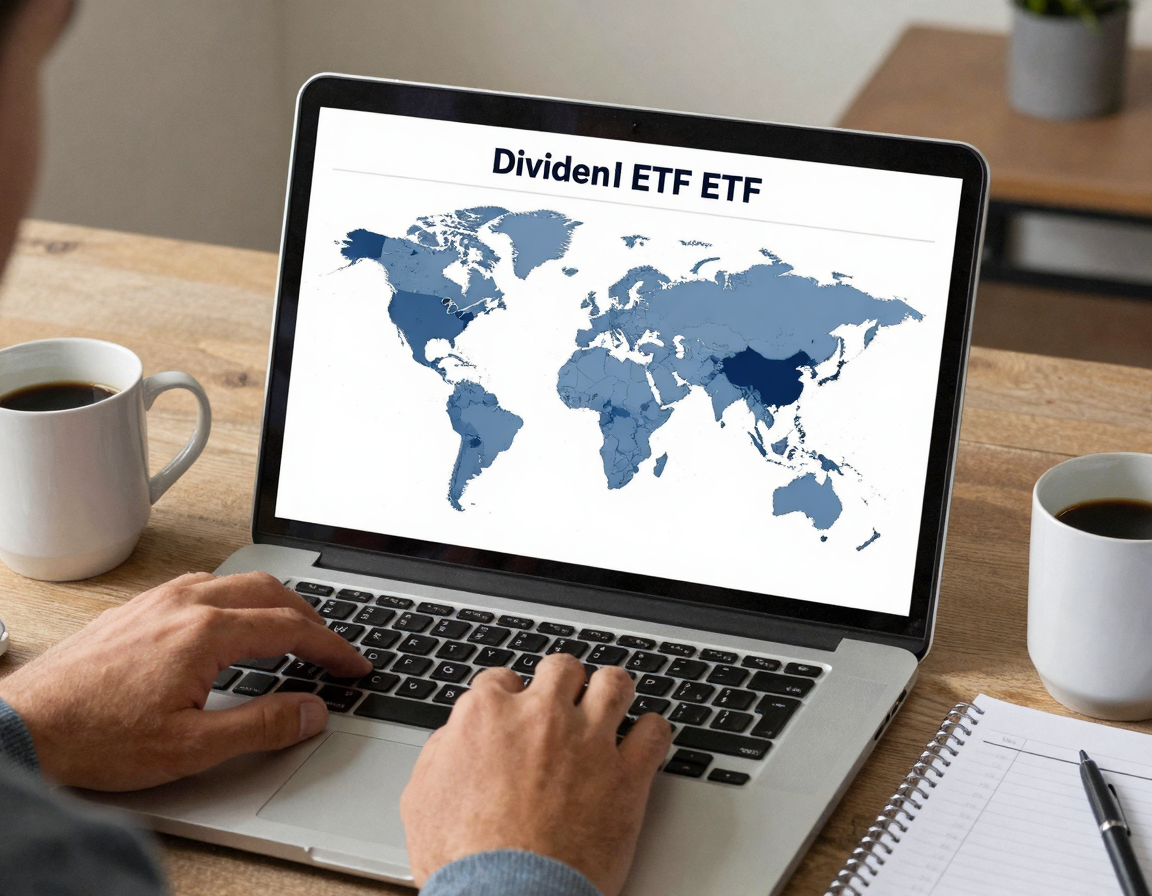
In 2026 projections, dividend strategies shine as rates fall, with KNG’s 8% yield and DIVO’s 6.13% leading high-income plays, though covered calls limit upside. SCHD and DGRO emphasize growth, with international yields meaningfully higher per iShares analysis.
Morningstar ratings highlight sustainability, positioning these ETFs to beat S&P 500 yields for passive income amid volatility.
How to Apply This in Practice
Practical Checklist for Implementing Your Dividend ETF Strategy:
• Assess your cash flow needs and risk tolerance: Target 4-6% portfolio yield for consistency.
• Open a brokerage account supporting commission-free ETF trades.
• Allocate initial investment: 40% DGRO/SCHD, 30% KNG/DIVO, 20% IGRO/SCHY, 10% PEY.
• Enable dividend reinvestment initially, then switch to cash distributions for income.
• Rebalance annually or after 10% deviations to maintain diversification.
• Monitor quarterly: Track yield sustainability and dividend growth rates.
• Use tax-advantaged accounts like Roth IRAs for efficiency, noting covered call ETFs like DIVO may have ordinary income components.
• Start small: Invest $10,000+ to cover expense ratios effectively.
• Review 2026 Fed rate moves for tactical adjustments.
Risk Note
Dividend ETFs face risks including dividend cuts during recessions, interest rate sensitivity, and covered call strategies capping upside while exposing to full downside. KNG’s muted 7.66% five-year return illustrates this trade-off. International funds add currency and geopolitical risks. Past performance does not guarantee future results; consult a financial advisor.