1. Understanding ETF Rebalancing Fundamentals
ETF rebalancing is the process of adjusting your portfolio’s asset allocation back to its target percentages. Over time, different asset classes grow at different rates, causing your portfolio to drift from its intended allocation. For example, if you target 60% stocks and 40% bonds, a strong stock market might push your allocation to 65% stocks and 35% bonds. Rebalancing brings it back to your target.
The frequency of rebalancing directly impacts two critical factors: how closely your portfolio tracks your intended strategy and how much you pay in transaction costs. Understanding the trade-off between these factors is essential for optimizing your investment returns.
2. Quarterly Rebalancing: Frequency and Benefits
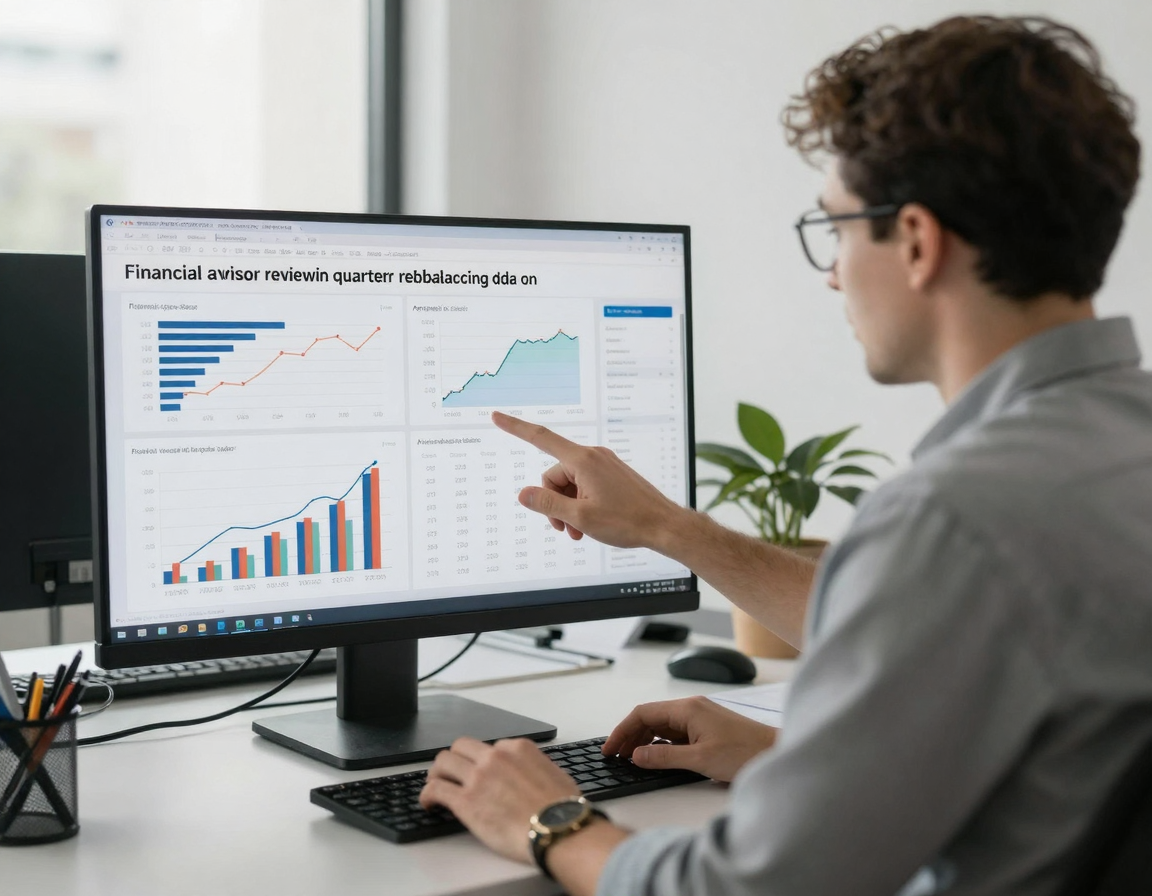
Quarterly rebalancing means adjusting your portfolio four times per year, every three months. This approach offers several advantages for active investors. More frequent adjustments help maintain tighter alignment with your target asset allocation, reducing portfolio drift and ensuring your risk exposure remains consistent with your investment plan.
Quarterly rebalancing is particularly beneficial in volatile markets. Research shows that non-rebalanced portfolios experienced 15% higher volatility during the COVID-19 crash, demonstrating the risk management value of regular adjustments. For investors in tax-advantaged accounts like IRAs and 401(k)s, quarterly rebalancing with 5% thresholds is often recommended since there are no tax consequences from trading.
Sector-specific and factor-based ETFs often benefit from quarterly rebalancing. These funds track indices that change more frequently than broad market indices, making regular adjustments more important for maintaining index tracking accuracy.
3. Semiannual Rebalancing: Efficiency and Cost Considerations
Semiannual rebalancing occurs twice per year, every six months. This approach represents a middle ground between annual and quarterly strategies, offering a balance between maintaining portfolio alignment and minimizing transaction costs.
The cost advantage of semiannual rebalancing is significant. Research from Morningstar found that quarterly rebalancing increases transaction costs by nearly 70% compared to annual rebalancing, while reducing portfolio drift by only an additional 0.3%. Semiannual rebalancing falls between these extremes, providing moderate cost savings while still maintaining reasonable portfolio discipline.
Broad market ETFs, which track stable indices like the S&P 500, are well-suited to semiannual rebalancing. These indices change gradually, and the relatively stable nature of large-cap stocks means that semiannual adjustments typically provide sufficient portfolio maintenance without excessive trading.
4. Performance Trade-Off Analysis: What the Data Shows

Comprehensive research provides clear guidance on the performance implications of different rebalancing frequencies. A Vanguard study using historical market data from 1926 to 2014 found that annual rebalancing with 5% threshold bands provides the optimal balance between risk control and transaction costs for most investors.
The Morningstar 2023 study revealed that quarterly rebalancing reduces portfolio drift by only 0.3% compared to annual rebalancing, yet increases transaction costs by approximately 70%. This means that for most investors, the additional benefit of quarterly rebalancing does not justify the higher costs. Semiannual rebalancing offers a more efficient middle ground.
However, the relationship between rebalancing frequency and returns is not straightforward. During the 2009-2021 bull market, non-rebalanced portfolios actually outperformed rebalanced ones by approximately 0.5% annually. This occurs because rebalancing forces you to sell outperforming assets and buy underperforming ones. In trending markets, this strategy reduces returns. Conversely, in mean-reverting markets, rebalancing can add 0.2-0.4% annually by capturing the tendency of outperformers to underperform and vice versa.
5. Cost Impact and Transaction Efficiency
Transaction costs are a critical but often overlooked factor in rebalancing decisions. Every time you buy or sell an ETF, you incur costs including bid-ask spreads, potential commissions, and market impact. These costs accumulate quickly with frequent rebalancing.
For small portfolios under $100,000, transaction costs represent a proportionally larger drag on returns. These investors should consider annual rebalancing with 5-7% thresholds to minimize costs. For large portfolios exceeding $1,000,000, more frequent rebalancing may be justified because transaction costs represent a smaller percentage of total assets.
The type of assets in your portfolio also affects optimal rebalancing frequency. Highly liquid assets like broad market ETFs allow for more frequent rebalancing with minimal cost impact. Less liquid assets, such as certain bonds or emerging market stocks, may necessitate less frequent adjustments to avoid excessive trading costs.
6. Threshold-Based vs. Calendar-Based Approaches
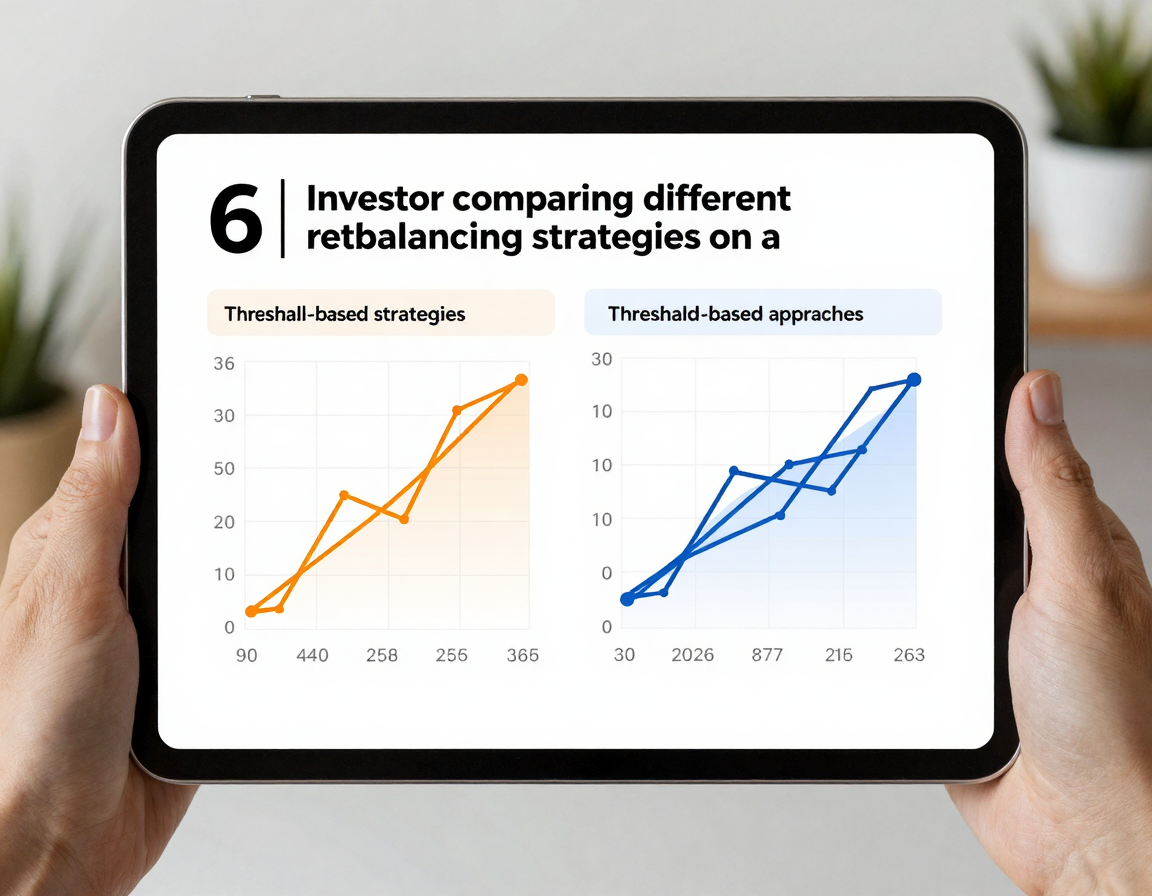
Beyond choosing between quarterly and semiannual schedules, investors should consider whether to use calendar-based or threshold-based rebalancing. Calendar-based rebalancing adjusts your portfolio on a predetermined schedule regardless of market movements. This approach is simple to implement but may trigger unnecessary trades during low-volatility periods and miss significant allocation drift between scheduled dates.
Threshold-based rebalancing only triggers adjustments when allocations drift beyond predetermined thresholds, such as 5% or 10%. A 2023 BlackRock study found that threshold-based rebalancing produces better long-term performance results than calendar-based approaches while maintaining close alignment to strategic asset allocation. This method responds directly to portfolio drift, reduces unnecessary trading, and maintains tighter risk control.
The most recommended approach combines annual reviews with 5% absolute thresholds, according to research by financial planner Michael Kitces. This hybrid method offers optimal practical implementation and risk management. In high-volatility environments, use wider rebalancing bands of 7-10%. In low-volatility environments, use narrower bands of 3-5%.
How to Apply This in Practice
Step 1: Define Your Target Allocation
Establish specific asset allocation targets based on your risk tolerance, time horizon, and investment goals. Document these targets clearly to maintain discipline during market fluctuations.
Step 2: Choose Your Rebalancing Method
For most U.S. investors with taxable accounts, annual rebalancing with 5% threshold bands provides the optimal balance. For tax-advantaged accounts like IRAs and 401(k)s, quarterly or semiannual rebalancing with 5% thresholds is appropriate since there are no tax consequences.
Step 3: Monitor Portfolio Drift
Track how your actual allocation drifts from your target allocation. Use spreadsheets or portfolio tracking tools to monitor this regularly. When any asset class drifts beyond your threshold, execute your rebalancing plan.
Step 4: Optimize Execution
When rebalancing, use limit orders near the mid-point of bid-ask spreads to minimize trading costs. Implement tax-aware strategies across accounts by selling losing positions first in taxable accounts. Choose cost-effective rebalancing targets that minimize unnecessary trades.
Step 5: Maintain Discipline
The most critical factor in successful portfolio rebalancing is consistency and discipline in implementation, regardless of the specific frequency or methodology chosen. Stick to your plan even when markets are volatile or trending strongly in one direction.
Risk Note
Rebalancing is primarily a risk management tool rather than a return enhancement strategy. While rebalancing can reduce portfolio volatility and help you maintain your intended risk exposure, it does not guarantee profits or protect against losses in declining markets. The optimal rebalancing frequency depends on your specific circumstances, including portfolio size, account type (taxable vs. tax-advantaged), asset composition, and market conditions. Consider consulting with a financial advisor to develop a rebalancing strategy tailored to your individual situation. Past performance does not guarantee future results, and the historical data cited in this article may not be predictive of future market behavior.