In a soft-landing scenario, where U.S. economic growth moderates to around 2% real GDP with inflation nearing 2% without tipping into recession, bond ETFs focused on **short to intermediate durations** offer U.S. investors attractive income and diversification benefits amid an expected steepening yield curve and Fed rate cuts.
1) Understanding the Soft-Landing Scenario
A soft landing involves the Federal Reserve easing rates as inflation falls sharply while growth remains positive, avoiding recession. Markets price in rate cuts, but without major growth scares, the U.S. 10-year Treasury yield may stay rangebound between 3.5% and 4.5%. Nominal GDP growth around 4% aligns with a 3% to 3.5% federal funds rate and 4% to 4.5% 10-year yields. Historically, high-quality bonds perform well in soft landings, providing diversification as they resume an inverse relationship with equities.
2) Yield Curve Dynamics in a Soft Landing

Both soft-landing and recession scenarios favor a steepening U.S. yield curve, with central banks cutting short-term rates while long-term yields face pressure from deficits. This steepening supports positioning in the short end to intermediate part of the curve. The five-year area appears particularly attractive in nominal and real terms, benefiting from price appreciation in rate-cutting cycles. Cash reinvestment risk rises as policy rates decline, making intermediate-duration bonds preferable to lock in yields.
3) Why Duration Matters for Bond ETFs
Duration measures a bond’s sensitivity to interest rate changes; shorter durations reduce price volatility in uncertain environments like potential trade wars or inflation spikes. In 2026, with the Fed’s easing cycle winding down to one or two more cuts, steady income from short-duration ETFs becomes key rather than price rallies. Overweighting short to intermediate durations positions portfolios for curve steepening, where short-end rates fall faster than long-end yields.
4) Recommended Duration Buckets for ETFs

Favor short-duration (1-3 years) for stability and intermediate (3-7 years) for yield pickup in a soft landing. Avoid long-duration bonds due to risks from high government deficits pushing long-term yields higher. U.S. agency mortgage-backed securities (MBS) and select emerging market bonds complement this, offering attractive spreads in low volatility. Corporate bonds may outperform Treasuries as growth supports low defaults.
5) Top Bond ETFs Aligned with This Strategy
Core holdings like Vanguard Total Bond Market ETF (BND) provide broad exposure with a low 0.03% expense ratio and $149 billion in assets, ideal for efficiency. For targeted short-duration, consider Treasury ETFs in 1-3 year or 5-7 year maturities to manage rate sensitivity. Agency MBS ETFs benefit from tight historical spreads versus Treasuries. Low-cost options enhance net returns in normalized yield environments.
6) Historical Performance and 2026 Outlook
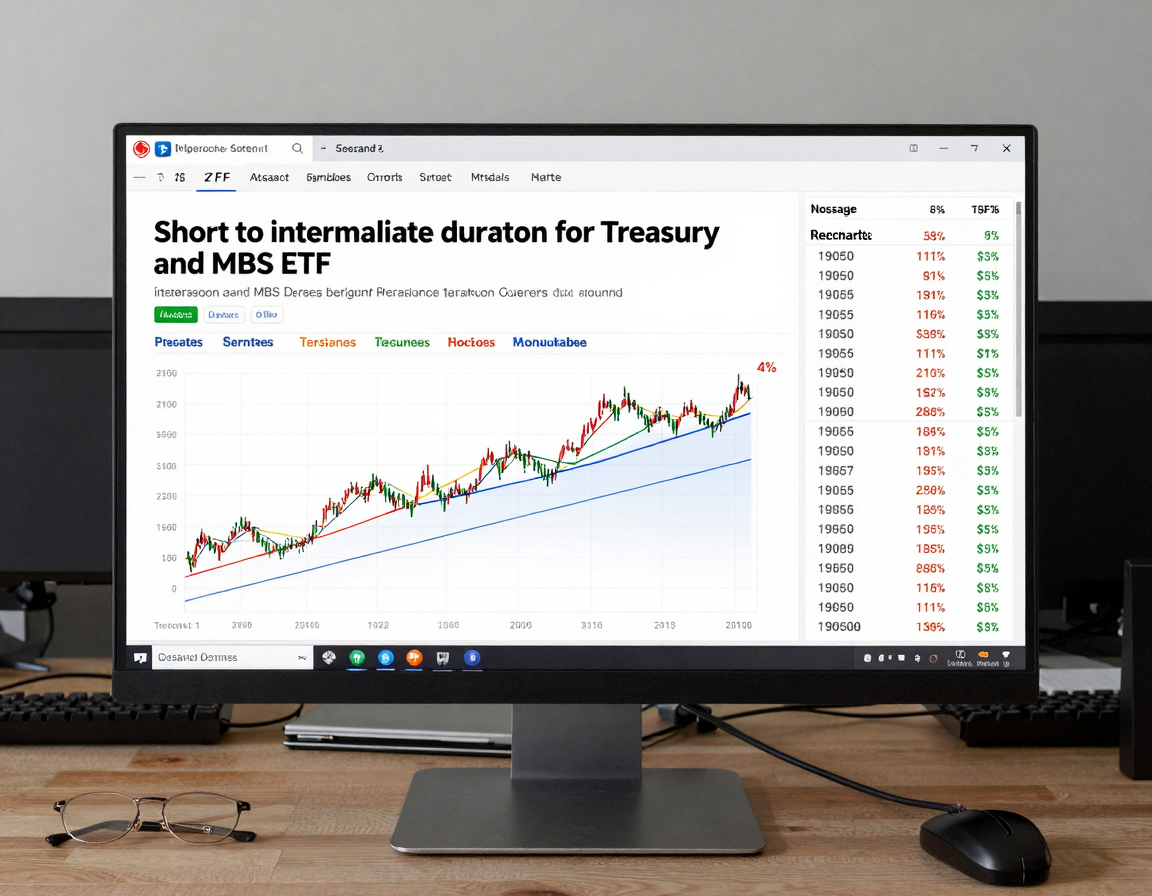
Bonds excelled post-1995 soft landing with strong GDP, stable labor, and falling inflation, delivering solid risk-asset returns. In 2026, expect income-driven returns from resilient growth and steepening curves, with corporates gaining from fiscal policy. Active fixed income thrives amid dispersion, with bonds cheap relative to equities.
How to Apply This in Practice
Practical Checklist for U.S. Investors:
Assess your portfolio’s current duration exposure using tools like ETF screeners.
Allocate 40-60% to core intermediate ETFs like BND for broad coverage.
Add 20-30% short-duration Treasuries to capture front-end cuts.
Incorporate 10-20% MBS or IG corporate ETFs for yield enhancement.
Rebalance quarterly, monitoring 10-year yields versus fed funds expectations.
Limit long-duration to under 20% to hedge deficit risks.
Compare expense ratios; prioritize under 0.10% for cost efficiency.
Pair with equities for diversification, targeting 40/60 stock-bond mix.
Risk Note
This strategy assumes a soft landing; a harder recession could drive deeper rate cuts, favoring longer durations, while persistent inflation might flatten the curve and hurt bonds. Yield curve steepening is not guaranteed, and corporate spreads could widen if growth falters. ETF liquidity and fees impact returns; past performance does not predict future results. Consult a financial advisor for personalized advice.