U.S. presidential elections consistently influence financial markets through heightened volatility and shifts in sector performance, creating opportunities and risks for investors in risk assets like equities.
Historical data shows pre-election uncertainty leads to lower returns and elevated volatility, while post-election periods often deliver stronger gains as markets adjust to reduced political risk.
1) Historical Volatility Patterns Around Elections
Elections amplify market volatility, particularly in the months leading up to voting day. Analysis of cycles since 1980 reveals the RVX (relative value index) spikes pre-election, coinciding with subdued returns in U.S. large-cap stocks like the Russell 1000.
Post-election, volatility drops sharply, with the three-month period averaging higher returns than the pre-election equivalent, driven by eased uncertainty and optimism over new policies.
T. Rowe Price data confirms S&P 500 volatility peaks one and three months before elections, regardless of outcome, with similar seasonal patterns in non-election years.
When incumbents lose, pre-election volatility surges even more, reflecting policy shift fears.
2) Presidential Cycle Returns and the First-Year Boost

The four-year presidential cycle features the strongest equity returns in the first year of a new term. LSEG data from 11 cycles since 1980 shows this phase outperforms due to policy anticipation, irrespective of party.
S&P 500 average returns are modestly lower in election years compared to non-election years, but post-election 1-, 6-, and 12-month periods underperform non-election equivalents, partly due to recession overlaps in 54% of first years.
Congressional control matters: Markets perform better post-election when the president’s party holds or shares Congress, as unified opposition hinders pro-growth measures.
Even in divided Congress scenarios, S&P 500 posted double-digit returns historically.
3) Sector Rotation Driven by Election Outcomes
Sector dispersion intensifies during election Novembers. S&P Global analysis categorizes months into presidential election, congressional election, non-election November, and others, finding cross-sector effects exceed averages in 71% of presidential election months for S&P 500.
This rotation accelerates in mid- and small-caps during congressional elections, outpacing presidential ones, as policy expectations shift allocations toward or away from sectors like financials, energy, or tech based on anticipated regulations.
Democratic administrations correlate with certain sector strengths, while Republican ones favor others, influenced by trade, tax, and deregulation policies, though economic factors dominate.
4) Risk Assets in Pre- vs. Post-Election Environments
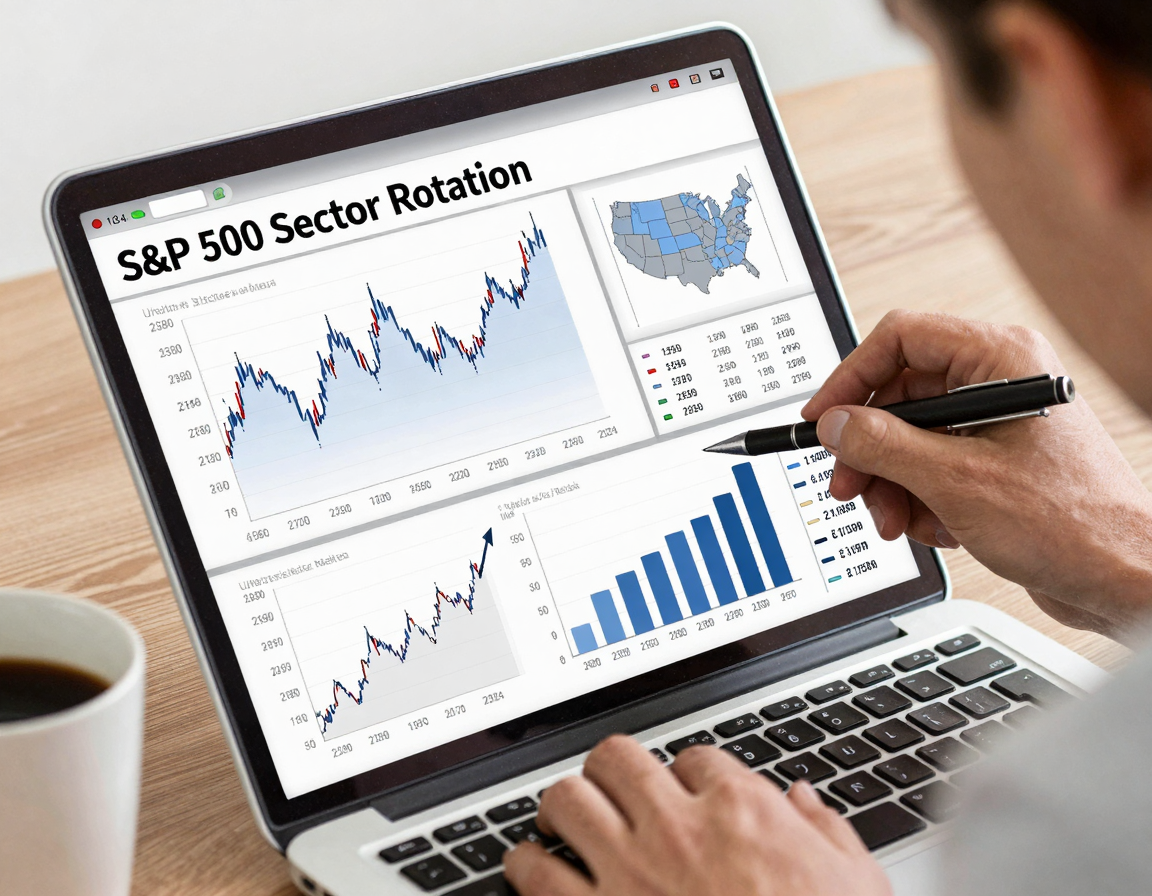
Risk assets like equities face headwinds pre-election from volatility but rally post-election. Russell 1000 exhibits noticeable upticks immediately after, with first-year gains standing out in the cycle.
Incumbent losses heighten pre-vote volatility in risk assets, but markets recede afterward; incumbent wins see declining volatility pre-election.
Overall, election-year S&P 500 returns trail long-term averages, yet fundamentals like economy and Fed policy drive performance more than politics.
5) Influence of Congressional and Midterm Dynamics
Midterm elections trigger sector rotation, with weaker performance pre-vote and stronger post-vote patterns.
Unified presidential party control post-election supports better market outcomes via policy passage.
Global events, inflation, and investor confidence overshadow election effects on risk assets.
6) Long-Term Fundamentals Over Political Noise

While elections induce short-term rotation and volatility, T. Rowe Price emphasizes basing decisions on economic health, not outcomes.
Presidents face recessions in over half of first years, explaining post-election softness despite volatility relief.
Policy differences exist, but monetary policy and globals matter more.
How to Apply This in Practice
Practical Checklist for U.S. Investors:
1. Monitor volatility indices like RVX three months pre-election; reduce risk asset exposure if spikes exceed historical norms.
2. Position for post-election rally: Increase large-cap equity tilt in Q4 election year, targeting first-year cycle strength.
3. Assess Congressional control: Favor sectors resilient to gridlock, like defensives, if opposition dominates.
4. Track sector dispersion in October-November; rotate to outperformers based on polls (e.g., financials under deregulation expectations).
5. Diversify beyond U.S. equities; hedge with fundamentals check—strong economy trumps politics.
6. Rebalance post-election: Capitalize on volatility drop by adding risk assets when uncertainty eases.
7. Avoid overreaction: Historical data shows positive long-term returns even in tough scenarios.
Risk Note
Historical patterns do not guarantee future results; elections interact with recessions (54% first-year overlap), Fed actions, inflation, and geopolitics, amplifying downside in risk assets.
Consult professionals; past sector rotations varied by unique events.