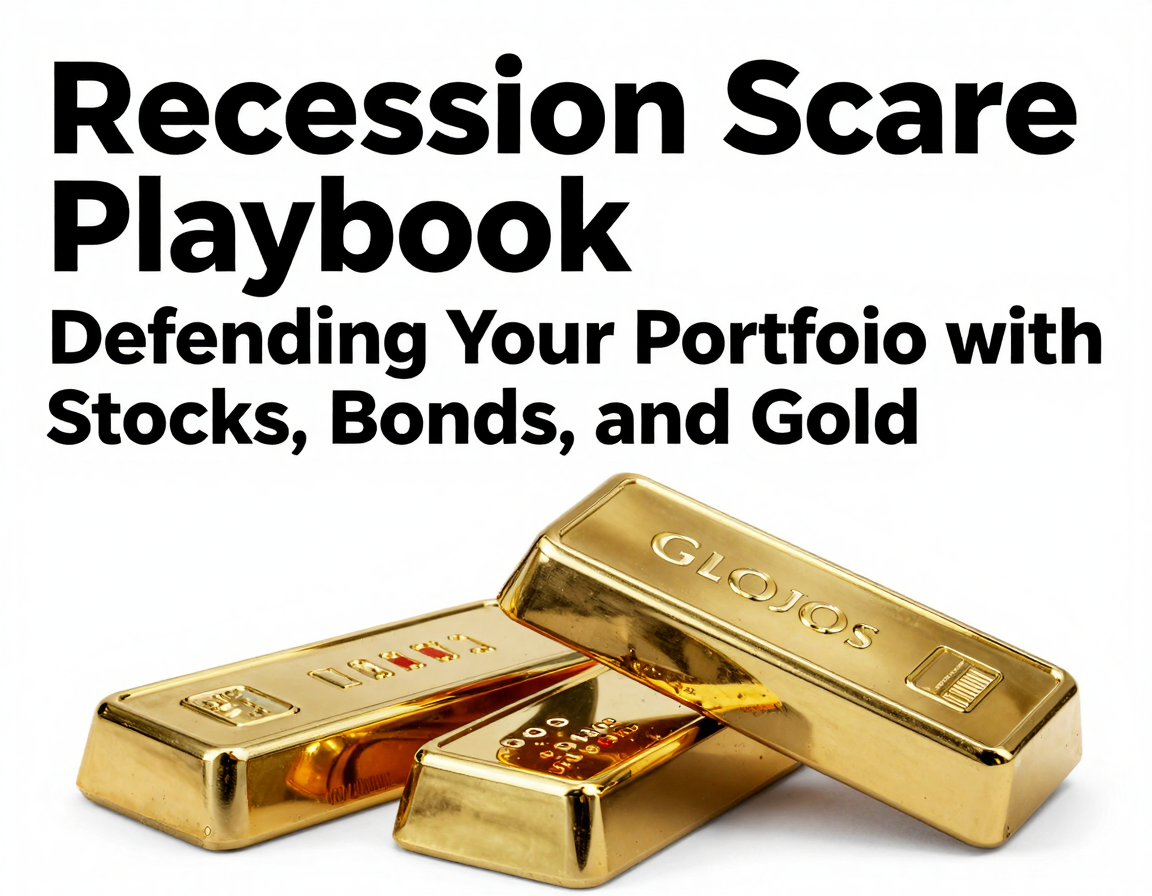
Recession scares grip markets periodically, prompting U.S. investors to seek defensive strategies for their portfolios. Historical data shows that a balanced approach with stocks, bonds, and gold can mitigate losses, as core bonds often deliver positive returns in the early recession phase while risk assets like equities suffer.
1) Understanding Recession Stages and Asset Impacts
Recessions unfold in stages, with the first half marked by declining economic activity, rising unemployment, and falling growth. During this period, core bonds such as U.S. Treasuries and investment-grade securities have historically posted positive returns, helping preserve principal and reduce portfolio volatility. Equities, high-yield bonds, and commodities, however, typically experience negative returns as risk aversion spikes. In contrast, the second half of recessions sees risk assets like stocks rebound strongly, outperforming as recovery signals emerge.
The 60/40 portfolio—60% stocks and 40% bonds—has historically softened the blow of nearly every market crash over 150 years, though rare exceptions like 2022 highlight the need for diversification beyond traditional bonds. Bond markets currently show tight credit spreads, with investment-grade corporates at 77 basis points over Treasuries (below the 20-year average of 155) and high-yield at 319 (below 510 average), signaling no imminent recession despite stock pullbacks.
2) Building a Bond Fortress in Early Recession

Core bonds shine in recessions due to safe-haven demand, with Treasuries and investment-grade securities providing positive returns in the first half. Typically, inflation drops, lowering yields and boosting bond prices, though fiscal stimulus could temper this by pressuring yields higher, as seen post-2020. TIPS (Treasury Inflation-Protected Securities) offer protection if inflation exceeds breakeven rates; for instance, a TIPS with -1.32% yield at issuance delivered 3.11% actual yield when CPI averaged 4.43% over five years, outperforming nominal bonds.
Despite 2022’s bond decline alongside stocks, bonds have since outperformed, with the Bloomberg Aggregate up over 2% year-to-date in early 2025 while the S&P 500 fell more than 3%. Credit spreads remain below crisis levels—far from GFC peaks of 622 for investment-grade and 2147 for high-yield—indicating accessible credit and economic stability.
3) Selective Stock Positions for Resilience
Stocks generally underperform in recession first halves but rally in the latter stages and expansions. Since 1950, market returns have averaged positive across recessions, including dividends, with 5 of 11 recessions showing outright gains. Focus on defensive sectors like utilities, healthcare, and consumer staples, which exhibit lower beta and stable earnings during downturns.
The recent S&P 500 correction from 6147 to 5504 retraced 23% of its rally but stayed in correction territory, not bear market depths, aligning with bond signals of moderate slowdown rather than recession. When the Fed cuts rates, stocks often benefit post-recession, though bonds provide nearer-term support if downturn hits.
4) Gold’s Role as Recession Safe Haven

Gold acts as a non-correlated asset, preserving value when equities falter. Historically, it rises during uncertainty, offering diversification as stocks and bonds occasionally move together, like in 2022 when the 60/40 portfolio dropped 25.1%. Investors turn to gold amid recession fears, geopolitical tensions, or inflation surprises.
Unlike bonds tied to yields, gold benefits from real yield declines and dollar weakness common in slowdowns. Pairing 5-10% gold allocation enhances portfolio resilience without sacrificing long-term growth potential from stocks and bonds.
5) Optimal Allocation: The 60/40 Evolution
The classic 60/40 has endured 150 years of stress, muting stock crashes and bond bear markets. Enhance it with 10% alternatives like gold to counter correlated drawdowns. Core bonds remain key for all cycle stages, especially slowdowns. Current tight spreads suggest bonds aren’t pricing recession, supporting overweight positions.
T. Rowe Price notes core yields may bottom early in recessions as economic activity peaks contraction, with credit spreads peaking simultaneously. Balance with TIPS if inflation risks from stimulus persist.
6) Timing and Rebalancing Tactics

Rebalance quarterly or on 5-10% deviations to maintain targets. Enter bonds early on slowdown signals like yield curve shifts; add gold on volatility spikes. Post-2022, bonds regained diversification role, outperforming equities. Monitor Fed actions—rate cuts favor bonds initially, stocks later.
Avoid market timing; data shows average positive returns through recessions. Use low-cost ETFs for exposure: Vanguard Total Bond (BND) for core, iShares TIPS (TIP), SPDR Gold (GLD), and S&P 500 (VOO).
How to Apply This in Practice
Practical Checklist:
• Assess allocation: Aim 50-60% stocks (defensive tilt), 30-40% bonds (70% core Treasuries/investment-grade, 30% TIPS), 5-10% gold.
• Monitor indicators: Watch credit spreads (>500 bps high-yield signals recession), yield curves, unemployment.
• Rebalance on thresholds: Sell stocks/buy bonds if equities drop 10%; add gold on 20% S&P decline.
• Stress-test portfolio: Backtest vs. past recessions (e.g., GFC, 2020) using tools like Portfolio Visualizer.
• Dollar-cost average into dips: Invest fixed amounts monthly to capture rebounds.
• Review quarterly: Adjust for Fed policy, inflation breakevens.
Risk Note
Past performance does not guarantee future results. Bonds face inflation and stimulus-driven yield risks; stocks can suffer prolonged downturns; gold may lag in expansions. Diversification reduces but does not eliminate losses. Consult a financial advisor; this is not personalized advice. Markets can change rapidly, as seen in 2022’s correlated declines.