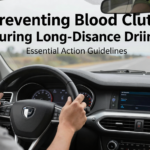
Long-distance driving significantly raises the risk of blood clots, particularly deep vein thrombosis (DVT), due to prolonged immobility that slows blood flow in the legs. Simple, evidence-based actions like regular movement, hydration, and proper attire can greatly reduce this risk, helping prevent serious complications such as pulmonary embolism (PE).
1) Understand the Risks of Blood Clots During Long Drives
Prolonged sitting in a car restricts circulation, causing blood to pool in the lower legs and increasing DVT formation. Risk factors include trips over four hours, dehydration from limited stops, and vein compression from tight seating. High-risk individuals have prior clots, clotting disorders, obesity, older age, recent surgery, pregnancy, estrogen-based birth control, or smoking. Awareness of these factors is the first step to safe driving.
2) Move Regularly to Boost Circulation
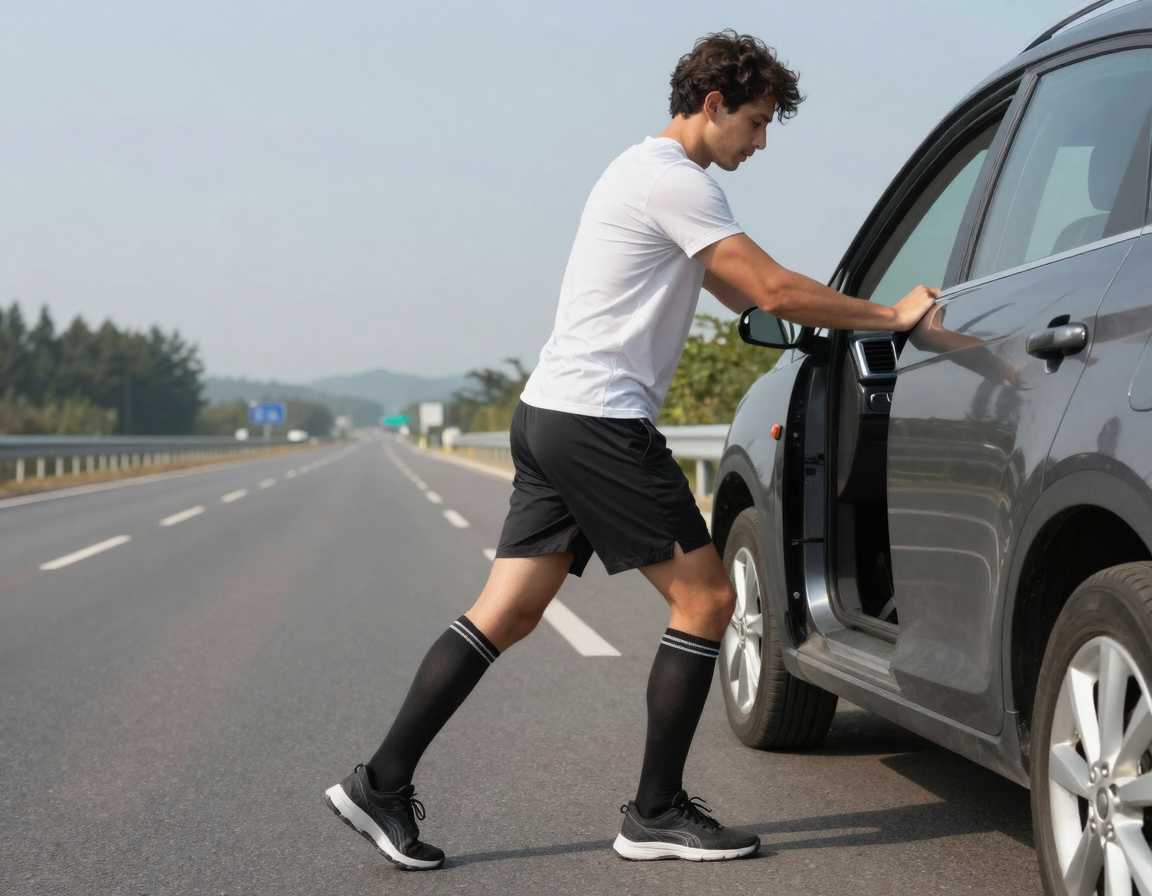
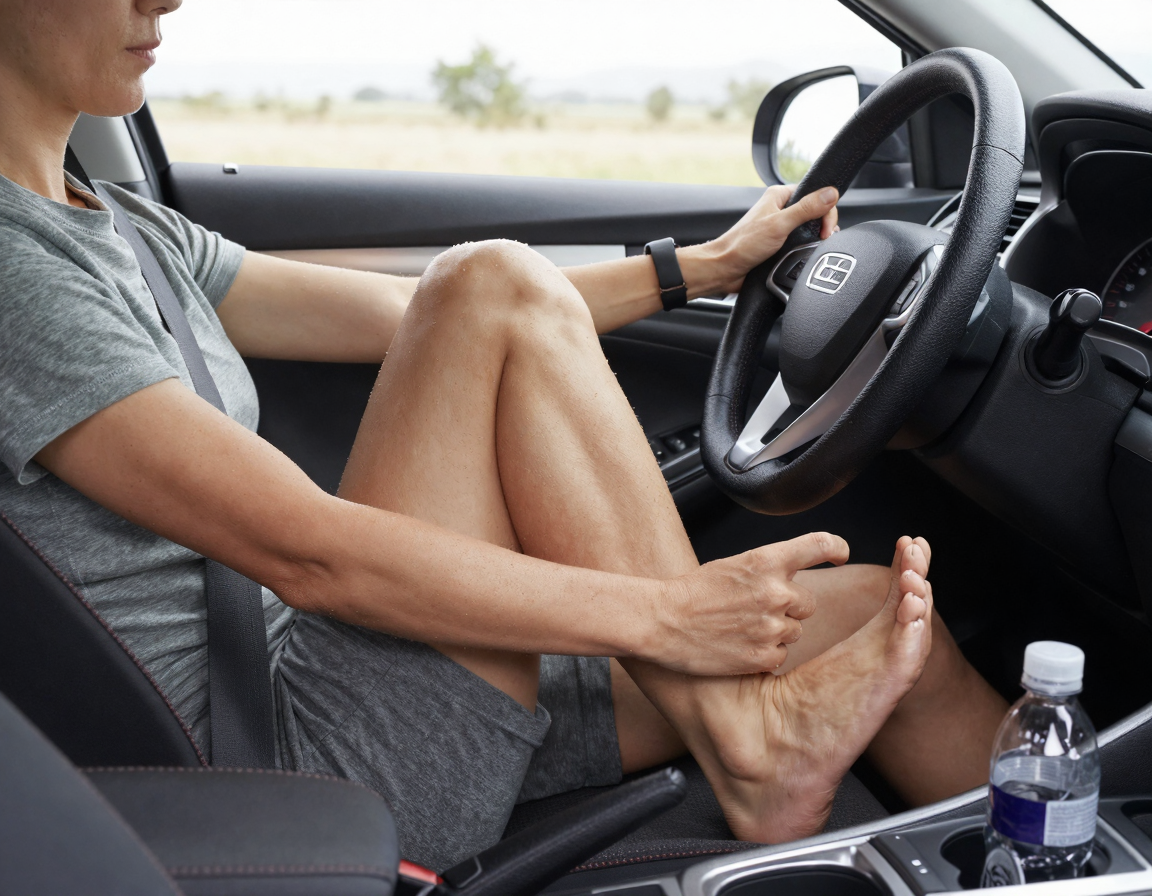
Stopping every 1-2 hours to walk and stretch is crucial for preventing clots during drives. Get out of the car, walk briskly for 5-10 minutes, and perform leg stretches to improve blood flow. If unable to stop frequently, do seated exercises like ankle rolls, foot flexes, calf raises, knee lifts, and pointing toes up and down. These actions mimic natural movement and counteract immobility effects.
3) Prioritize Hydration to Thin the Blood
Dehydration thickens blood, heightening clot risk, especially in dry car environments. Drink plenty of water before, during, and after the drive—aim for 8 ounces hourly. Avoid alcohol and caffeine, which worsen dehydration. Electrolyte drinks can help maintain balance during extended trips. Proper hydration supports optimal circulation alongside movement.
4) Use Compression Stockings for Leg Support
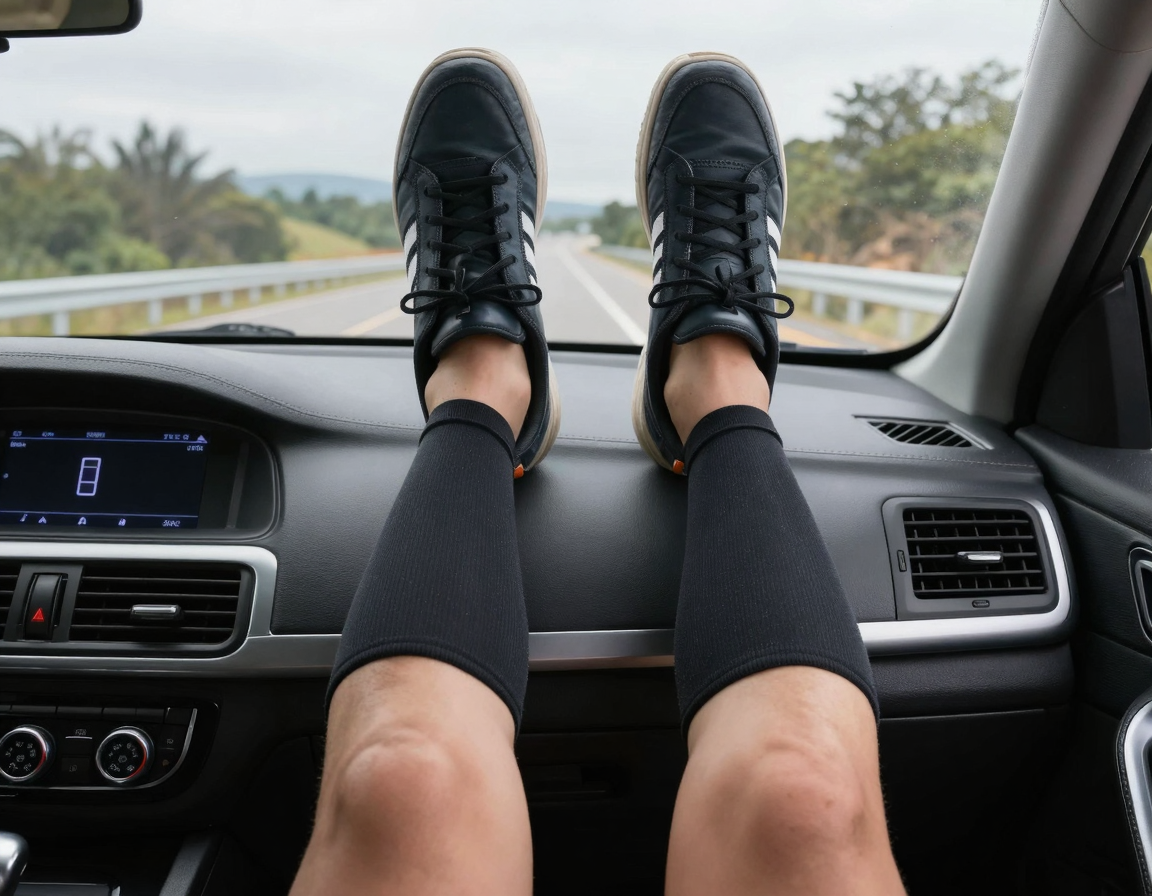
Graduated compression stockings apply gentle pressure—tightest at ankles, looser up the legs—to enhance venous return and reduce swelling. Wear them throughout the drive and consult a doctor for the right compression level, especially with vascular issues. Evidence shows they effectively lower DVT risk in long-travel scenarios.
5) Adopt Proper Seated Posture and Clothing
Avoid crossing legs, as it compresses veins and restricts flow. Keep feet flat, shift positions often, and elevate legs during breaks. Choose loose, breathable clothing around waist and thighs, plus non-constricting shoes for ankle freedom. These habits prevent additional circulation barriers from tight attire.
6) Plan Ahead with Long-Term Habits
For frequent drivers, regular exercise strengthens vascular health, while maintaining healthy weight reduces vein pressure. Anti-inflammatory diets with greens, nuts, and omega-3s support circulation. Quitting smoking and limiting alcohol further mitigate risks. Pre-trip doctor consultations for high-risk individuals may include medications.
How to Apply This in Practice
Practical Checklist for Long-Distance Driving:
- Plan stops every 1-2 hours for 5-10 minute walks and stretches.
- Drink 8 ounces of water hourly; skip alcohol and caffeine.
- Wear graduated compression stockings—doctor-approved.
- Perform seated exercises: 10 ankle circles, calf flexes, knee lifts per hour.
- Keep legs uncrossed, feet flat; wear loose clothes and shoes.
- Elevate legs during breaks if possible.
- Know symptoms: leg pain/swelling, redness, warmth—seek immediate care.
- High-risk? Consult doctor pre-trip for personalized advice.
Follow this checklist to integrate prevention seamlessly into your drive.
Risk Note
While these steps reduce DVT risk, they do not eliminate it entirely, especially for those with multiple risk factors. Clots can dislodge, causing life-threatening PE in about 1 in 3 cases. Seek emergency care for leg pain, swelling, shortness of breath, or chest pain. This guidance is informational; consult healthcare professionals for tailored advice.