The global semiconductor industry is showing early signs of recovery in industrial demand segments as it approaches a historic $1 trillion revenue milestone in 2026, driven by stabilizing supply chains and rising Edge AI applications in automation and automotive sectors.
U.S. investors can track specific data points like distributor reports, equipment sales, and regional sales growth to gauge the pace of this recovery amid broader AI-fueled expansion.
1) Current Market Stabilization Signals
Avnet Silica’s Trendliner report for Q4 2025 indicates semiconductor markets are beginning to recover, supported by easing supply chain pressures and sustained demand in industrial and automotive segments.
Global chip sales increased 29.8% year-to-year in November, with projections for nearly $1 trillion in annual sales in 2026, reflecting broad market stabilization.
While AI dominates U.S. growth at 23% CAGR, EMEA regions highlight industrial and automotive as key drivers, signaling potential spillover benefits for U.S.-listed firms with global exposure.
2) Role of Edge AI in Industrial Recovery

Edge AI is gaining momentum in industrial automation, advanced driver assistance systems (ADAS), and connected devices, boosting demand for both advanced and mature semiconductor nodes.
This shift from data center training to inference at the edge is expected to drive the next wave of growth into late 2020s, particularly in industrial robotics requiring real-time processing.
Early indicators include contracts like BOS Semiconductors’ AI tech for mobility and EnSilica’s program upgrades, pointing to incremental industrial demand.
3) Equipment Spending as a Leading Indicator
Semiconductor equipment sales hit a record $133 billion in 2025, projected to reach $156 billion by 2027, with back-end test equipment surging 48.1% to $11.2 billion in 2025.
This broad-based cycle, fueled by advanced packaging and logic demands, underscores sustained capital expenditure supporting industrial chip production ramp-up.
U.S. CHIPS Act incentives, totaling $39 billion, are accelerating domestic capacity, creating dual supply-demand dynamics that benefit equipment makers and chip suppliers.
4) Inventory and Supply Chain Metrics
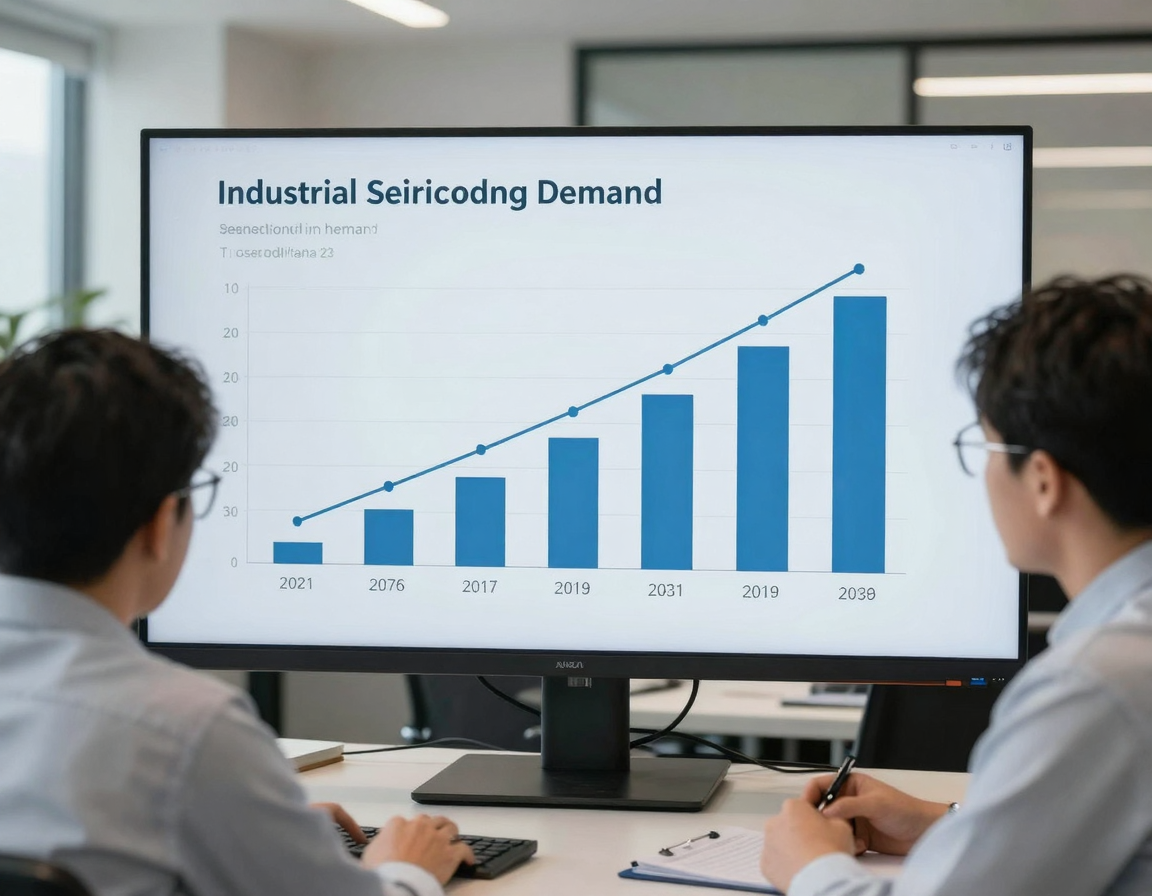
Distributors like Avnet report easing supply chain pressures, a critical early sign for industrial recovery after prolonged downturns.
Memory supercycles, with SK Hynix’s 2026 HBM4 capacity sold out pre-year, create ripple effects raising costs but ensuring pricing power that stabilizes mature node supply for industrial uses.
Monitor monthly global sales data from the Semiconductor Industry Association for year-over-year industrial segment trends.
5) Key Company Developments to Watch
Intel’s 18A node (1.8nm) is attracting external customers like Amazon and Microsoft, with increasing yields supporting broader manufacturing capacity for industrial applications.
Samsung’s 2nm process for HBM memory and agreements like Soitec’s POI wafers for Skyworks’ Sky5 platform indicate advancing tech readiness for industrial Edge AI.
Rapidus trials for Canon and Synopsys signal emerging capacity that could alleviate bottlenecks in industrial semiconductor supply.
6) Regional and Geopolitical Influences

Sovereign AI investments in UAE, Saudi Arabia, and Japan create secondary demand for high-end silicon, sustaining growth independently of Big Tech.
China, Taiwan, and Korea lead equipment spending geography, but U.S. domestic build-out via CHIPS Act diversifies supply risks for investors.
Deloitte forecasts $975 billion in 2026 sales with 26% growth, cautioning on AI dependency but affirming industrial resilience.
How to Apply This in Practice
Practical Checklist for U.S. Investors:
– Track Avnet Silica’s quarterly Trendliner reports for industrial demand signals.
– Monitor Semiconductor Industry Association monthly sales data, focusing on Americas YoY growth.
– Watch equipment sales forecasts from firms like VLSI Research for capex trends.
– Review earnings from Intel, Micron, and SK Hynix for HBM and foundry updates.
– Analyze CHIPS Act fund deployments via Commerce Department reports for U.S. capacity ramps.
– Follow Edge AI contract wins in industrial automation via press releases from EnSilica and BOS.
– Compare AI vs. industrial revenue breakdowns in company filings for bifurcation insights.
Risk Note
Despite positive signals, the industry remains heavily reliant on AI demand, with Deloitte warning of risks if AI growth slows; a potential 2027-2028 digestion period could temper industrial recovery.
Geopolitical tensions and supply chain vulnerabilities persist, as noted in bifurcated market dynamics.
U.S. investors should diversify beyond pure AI plays and prepare for volatility in mature industrial nodes.