Covered-call ETFs generate income for U.S. investors by holding stocks or assets and selling call options on them, collecting premiums that provide yield, especially appealing in volatile markets where traditional income sources may falter.
1)
Covered-call ETFs employ a strategy where the fund owns a portfolio of stocks, such as those mirroring the S&P 500 or Nasdaq-100, and writes call options against them. This approach delivers option premiums to investors as distributions, often monthly or quarterly, enhancing yield beyond dividends alone. In volatile markets, higher implied volatility boosts these premiums, making the strategy more lucrative as option buyers pay more for potential upside.
2)

Key pros include reliable income generation from premiums, which can offset stock price declines and provide steady cash flow for retirees or income-focused U.S. investors. These ETFs also reduce portfolio volatility, as premiums cushion downturns; for instance, the strategy balances growth potential with income, appealing when bonds or savings yield little. Actively managed funds like QYLD (Nasdaq-100) or XYLD (S&P 500) automate this for those avoiding direct options trading.
3)
Volatility amplifies premium income since options prices rise with market swings, allowing covered-call ETFs to capture higher yields from short-term, out-of-the-money (OTM) calls or even 0DTE (zero days to expiration) options that decay rapidly. This makes them suitable for sideways or moderately bullish markets, where stocks stay below strike prices, letting funds retain holdings and rewrite calls. Distributions become a buffer in choppy conditions, unlike pure equity ETFs that suffer full drawdowns.
4)
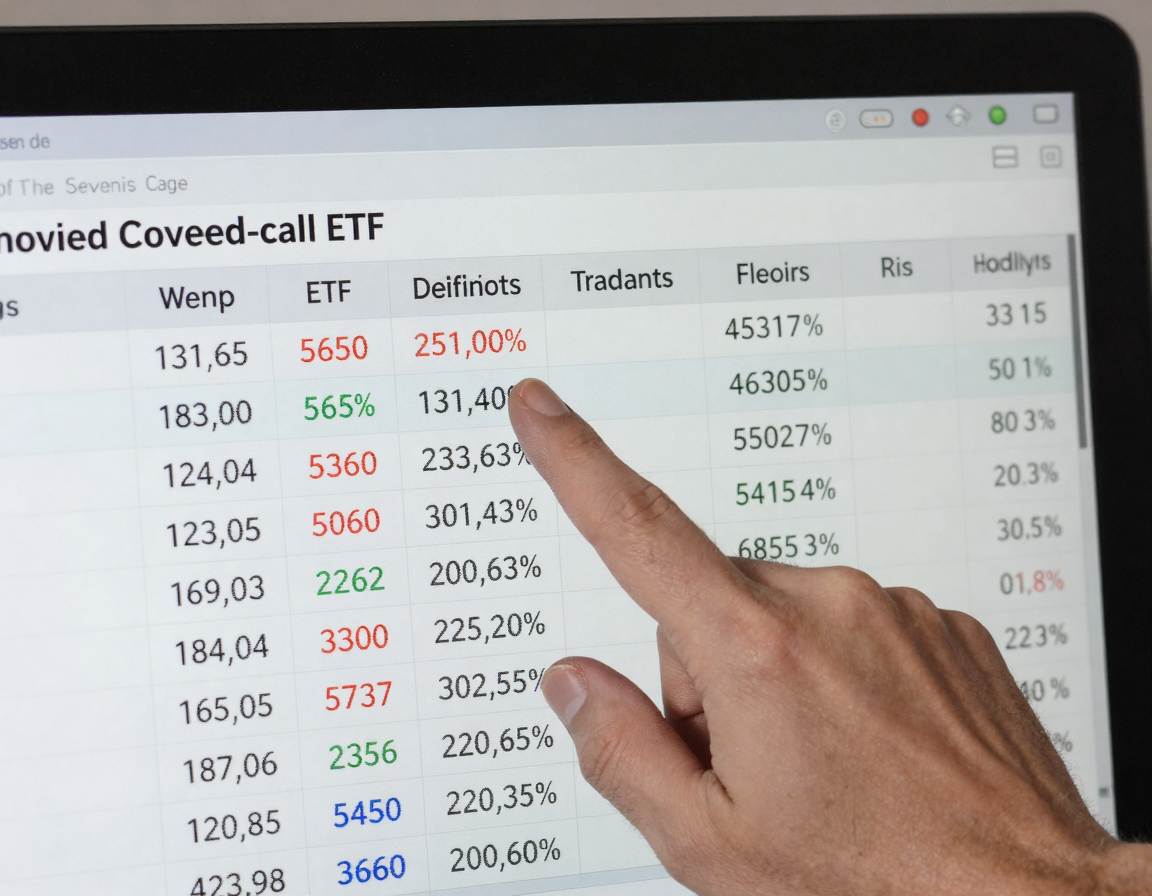
Hidden trade-offs emerge prominently in volatile upswings: if stocks surge past strike prices, shares get called away, capping gains at the strike plus premium, forgoing further appreciation. Premiums may not fully offset deep declines, leaving investors exposed to downside risk without full protection. In prolonged bull runs amid volatility, total returns lag buy-and-hold benchmarks, as seen in funds surrendering upside for income.
5)
Examples include JEPI, focusing on large-cap dividend stocks with covered calls for enhanced yield, and QYLD, which systematically writes at-the-money calls on Nasdaq-100 for high distributions but often underperforms in rallies. XYLD applies this to S&P 500, balancing broad exposure with income. In volatile 2022-like markets, these provided yields over 10% via premiums, outperforming plain indices on total return adjusted for volatility, though trailing in recoveries.
6)

Tax implications for U.S. investors involve premiums taxed as ordinary income, potentially higher than qualified dividends, reducing after-tax yield in taxable accounts. Opportunity cost is significant: in bull markets, forgone gains compound over time, making these better for neutral-to-bearish outlooks. Liquidity and management fees add drag, with active strategies varying strike selection and expiry to navigate volatility.
How to Apply This in Practice
Practical Checklist for U.S. Investors:
Assess your goals: Prioritize income over growth? Allocate 10-30% of portfolio to covered-call ETFs like JEPI or QYLD.
Check market outlook: Ideal for high volatility, flat, or mild uptrends; avoid strong bulls.
Review yields vs. benchmarks: Compare distribution rates (e.g., 8-12%) to S&P 500 total return, factoring cap.
Monitor NAV decay: Watch for erosion from called-away shares in rallies.
Diversify: Pair with growth ETFs; use in tax-advantaged accounts like IRAs.
Track expenses: Favor low-fee options; rebalance quarterly.
Simulate scenarios: Use tools to model volatile market performance.
Risk Note
Covered-call ETFs bear full downside risk of underlying assets, with premiums offering partial offset but no guarantee against losses; upside is explicitly capped if exercised. In extreme volatility, rapid calls or insufficient premiums can amplify underperformance versus plain equities. Past yields (e.g., 10%+) depend on conditions and are not assured; consult advisors for suitability.