AI is no longer just a software story. By 2026, the biggest dollars in artificial intelligence are expected to flow into the physical infrastructure that powers advanced models—data centers, chips, networking, and electricity. For U.S. investors, this build‑out presents both substantial opportunity and growing risk as capital expenditure (capex) surges to historic levels while questions mount about long‑term returns and valuations.
1) The Scale of the 2026 AI Infrastructure Build-Out
Recent forecasts suggest that AI infrastructure spending in 2026 will be measured in the hundreds of billions of dollars. Goldman Sachs Research estimates that the group of major AI hyperscaler companies is on track to invest about $527 billion in capital spending in 2026, up from $465 billion expected earlier in the earnings season.[2] Separate industry analyses point to total AI infrastructure spending, including data centers and related hardware, reaching roughly $700 billion by 2026 when aggregating guidance from large cloud providers and infrastructure players.[1][4]
Big Tech is a central driver of this surge. One analysis of earnings guidance shows the largest hyperscalers collectively planning over $500 billion in infrastructure investments in 2026, with Microsoft, Amazon, Alphabet, and Meta all sharply increasing capex to expand AI data centers and compute capacity.[4] Tech industry reporting similarly indicates that hyperscalers are preparing to spend nearly $700 billion on data center projects in 2026 alone, led by Amazon with a projected $200 billion, Google at roughly $175–185 billion, and Meta targeting $115–135 billion.[1]
At the same time, Nvidia’s CEO has publicly suggested that between $3 trillion and $4 trillion could be deployed into AI infrastructure by the end of the decade, underscoring expectations that 2026 is part of a multi‑year investment cycle rather than a one‑off spike.[1] While that longer‑term range is an estimate rather than a firm forecast, it reflects how industry leaders are framing the scale of the opportunity.
For U.S. investors, this backdrop means AI exposure is increasingly tied to capital-intensive businesses: data center operators, chipmakers, hardware vendors, power providers, and specialized real estate, not just software platforms.
2) Where the Money Is Going: Key Segments of AI Infrastructure
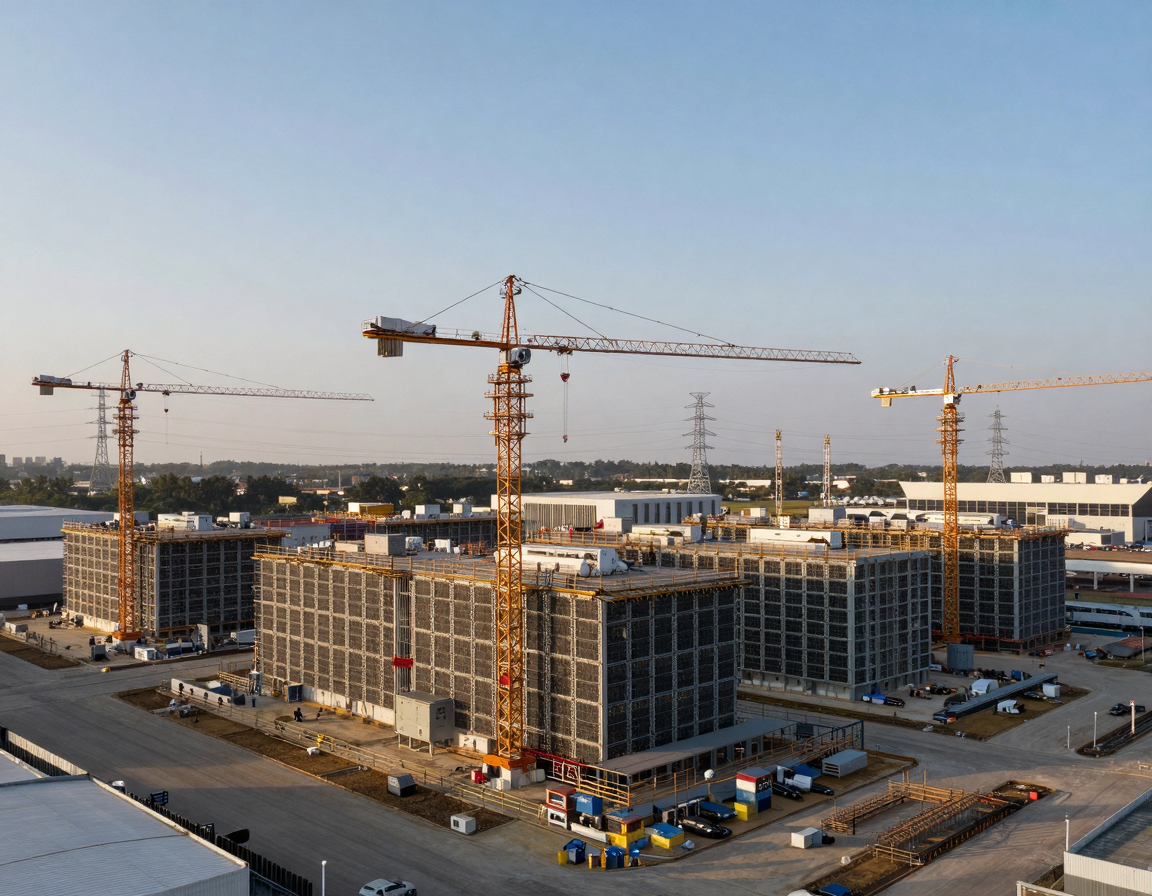
Within the broad AI theme, 2026 spending is concentrating in several infrastructure segments that are already influencing U.S. equity markets.
First, hyperscale data centers are seeing unprecedented expansion. Industry sources estimate that top cloud and social platforms will collectively spend hundreds of billions of dollars on new and upgraded data centers in 2026, as they race to deploy AI training and inference capacity.[1][4] This includes large new campuses like Meta’s multi‑billion‑dollar Hyperion site in Louisiana and additional facilities scheduled to come online in 2026.[1] These projects support demand for construction services, networking gear, advanced cooling, and backup power systems.
Second, semiconductors and AI accelerators remain central. Research from Goldman Sachs notes that recent equity gains have been heavily concentrated in AI infrastructure companies, particularly semiconductor manufacturers and related hardware suppliers, even as earnings estimates have risen more modestly.[2] The firm highlights that its basket of AI infrastructure names delivered an average 44% year‑to‑date return in one recent period, compared with only a 9% increase in forward earnings estimates, suggesting valuations have expanded faster than underlying profit expectations.[2]
Third, power infrastructure and utilities are becoming critical beneficiaries and potential bottlenecks. A 2026 AI investment guide points out that global AI infrastructure growth is colliding with power constraints, with data center electricity consumption expected to keep rising toward the end of the decade.[4] Morgan Stanley’s 2026 infrastructure outlook similarly identifies the proliferation of data centers and associated power needs as the two most important trends in the infrastructure space, highlighting opportunities in grid upgrades, transmission, and generation assets that can serve high‑density compute loads.[7]
Finally, specialized real estate and infrastructure vehicles, including data center–focused REITs and infrastructure funds, are seeking to capture recurring revenues from long‑term AI workloads. Fidelity’s AI outlook notes that the boom now touches rare earth minerals, energy infrastructure, and data‑center real estate deals across the U.S. market, reinforcing that the AI trade extends well beyond pure‑play software or chip stocks.[5]
3) Demand Drivers and the “Rebuild of the Digital Infrastructure Layer”
The investment wave is rooted in a structural shift in how compute is delivered and consumed. Industry analysts describe the current phase as a “rebuild of the digital infrastructure layer,” in which companies are redesigning data centers, networks, and energy systems to support AI workloads at scale.[3]
On the demand side, enterprises are rapidly testing and deploying generative AI and machine learning tools for productivity, automation, and new customer offerings. Commentary from market participants indicates that 2026 is expected to be a year in which AI adoption broadens, with faster model release cycles and increased experimentation across industries.[3] This adoption is driving cloud providers to secure long‑term access to accelerators, storage, and networking capacity.
Governments are also becoming a notable demand source. Analysts forecast that sovereign AI compute—national programs to build domestic AI infrastructure—could attract close to $100 billion in investment by the end of 2026, as countries seek strategic independence and control over sensitive data.[4] These initiatives can support demand for both domestic and U.S.-listed infrastructure providers, though specific opportunities depend on contract awards and regulatory frameworks.
At the same time, constraints are emerging. Data center power requirements are rising quickly, prompting new regulations and grid‑management measures, such as requirements for renewable energy sourcing or grid stability mechanisms in certain regions.[4][6] These constraints may both limit unchecked capacity growth and create opportunities for investors in energy storage, renewables, and high‑efficiency infrastructure solutions.
For investors, the key question is whether these structural demand drivers can support the high level of capex now being committed, and over what time horizon revenues and cash flows may catch up with today’s investment pace.
4) From Hype to Earnings: What 2026 Could Look Like for Investors
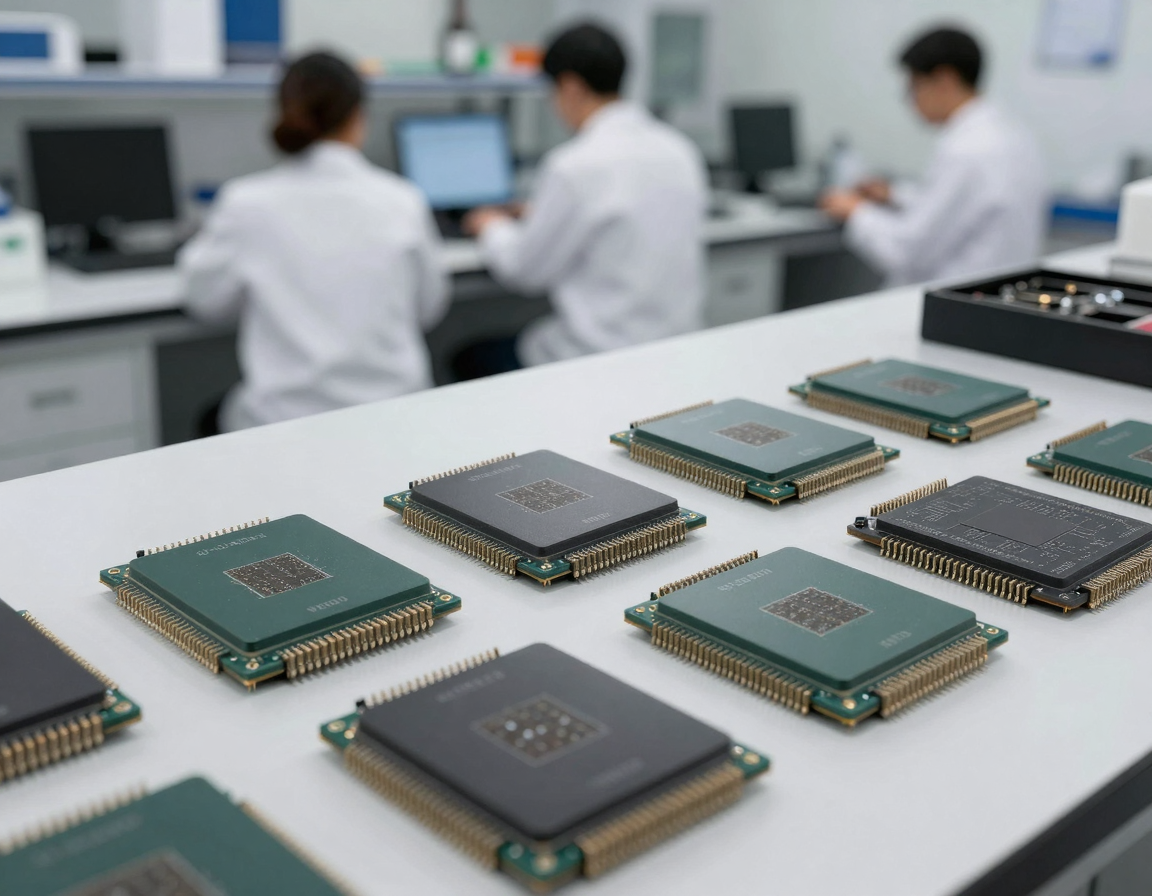
Market research suggests that the AI infrastructure trade has already produced outsized equity gains in certain segments. As noted, Goldman Sachs Research found that its AI infrastructure basket returned about 44% year‑to‑date in a recent period, versus only a 9% rise in the group’s consensus two‑year forward earnings estimates.[2] This divergence implies that a meaningful portion of the recent performance is driven by multiple expansion and expectations rather than realized profit growth.
Looking ahead to 2026, analysts at Goldman Sachs expect growth rates to moderate. While AI‑related capex is projected to grow strongly in the near term, the firm notes that overall AI spending growth is expected to slow to roughly 25% by the end of 2026 from much higher rates earlier in the cycle.[2] A separate infrastructure outlook cites a global AI infrastructure market compound annual growth rate of about 30% from 2024 through 2030, underscoring that while growth may remain robust, it is not expected to stay at early boom levels indefinitely.[8]
For U.S. equity markets, this creates a tension. On one side, continued build‑out supports revenue visibility for select semiconductors, data center operators, and power providers. On the other, the “timing of an eventual slowdown in capex growth poses a risk to these companies’ valuations,” as Goldman Sachs puts it.[2] If capital spending normalizes sooner or more sharply than expected, stocks that have priced in extended high growth could face de‑rating even if their fundamentals remain solid.
Institutional research and infrastructure outlooks also emphasize that not all parts of the value chain will benefit equally.[2][7] Companies with durable competitive advantages, long‑term contracts, or regulatory protections may be better positioned than cyclical suppliers or highly competitive niches where pricing pressure can quickly erode margins.
5) Key Risks: Valuations, Power Constraints, and Policy Uncertainty
Against this backdrop, U.S. investors considering AI infrastructure exposure in 2026 should pay particular attention to three broad risk categories.
First, valuation risk is prominent. The disconnect between recent share price gains in AI infrastructure baskets and comparatively modest upgrades to earnings expectations suggests vulnerability if expectations reset.[2] If capex growth decelerates or if competition compresses margins, price‑to‑earnings and price‑to‑sales multiples may come under pressure even without a broader market downturn.
Second, physical and regulatory constraints could limit or reshape growth. Industry analyses warn of growing strain on power grids and the need for substantial infrastructure upgrades to accommodate high‑density data centers.[1][4][7] Data center electricity usage is projected to rise significantly toward 2030, and regulators in various jurisdictions are already examining or implementing rules around energy sourcing, emissions, and grid reliability.[4][6] Delays in permitting, grid connections, or compliance efforts could slow certain projects, affecting timelines for revenue recognition at the companies involved.
Third, policy and geopolitical factors may influence investment patterns. The push for sovereign AI compute, export controls on advanced chips, and evolving data‑localization rules can all shift where infrastructure is built and which companies are eligible suppliers.[4] These dynamics introduce additional uncertainty for U.S.-listed firms that depend on international demand or cross‑border supply chains.
In addition, standard investment risks apply: cyclical downturns in technology spending, rapid shifts in preferred architectures or standards, and execution risks for large capital projects. As with prior infrastructure and technology build‑outs, periods of overcapacity or misallocated capital are possible, particularly if investment races ahead of sustainable end‑user demand.
6) Positioning Strategies for U.S. Investors

Given the mix of strong structural drivers and meaningful downside risks, many investors are approaching AI infrastructure as a long‑term theme within a diversified portfolio rather than a short‑term trade.
One approach is to gain diversified exposure across the AI infrastructure stack instead of concentrating solely in a few high‑profile names. This can include a blend of semiconductor manufacturers, data center operators or REITs, equipment providers, and select utilities or power infrastructure firms that stand to benefit from rising data center loads.[2][5][7] Some thematic exchange‑traded funds (ETFs) also aim to provide diversified exposure to AI infrastructure growth.[8]
Another consideration is to differentiate between companies primarily leveraged to capex cycles and those with more recurring or contracted revenue. Infrastructure outlooks highlight the appeal of long‑term contracted assets and regulated returns in the broader infrastructure space, which can provide cash‑flow visibility across cycles.[7] Within AI, this might favor high‑quality data center landlords or power providers with multi‑year agreements, compared with purely cyclical suppliers tied to short product cycles.
Investors can also pay attention to balance sheet strength and capital allocation discipline. Firms making large AI‑related investments may be taking on significant commitments; assessing leverage, free cash flow, and management guidance on return on invested capital (ROIC) can help gauge whether current spending levels are likely to create shareholder value over time.
Finally, aligning time horizon with thesis is crucial. Some institutional commentary compares the AI build‑out to earlier transformative infrastructure investments, noting that while near‑term uncertainty can be high, long‑term productivity gains may justify the scale of spending.[3] Investors with longer horizons may be better positioned to tolerate volatility and potential drawdowns if they believe AI infrastructure will underpin future economic growth.
How to Apply This in Practice
U.S. investors can translate the 2026 AI infrastructure outlook into a practical decision framework:
• Clarify your AI thesis. Decide whether you are targeting infrastructure exposure (data centers, chips, power) versus application‑layer software, and what role AI should play in your overall asset allocation.
• Map the value chain. List holdings and candidates across semiconductors, data center operators or REITs, equipment suppliers, utilities, and infrastructure funds to see where your current exposure is concentrated.
• Check concentration risk. Review position sizes in the most volatile AI‑linked names and ensure no single stock or narrow niche dominates your portfolio beyond your risk tolerance.
• Compare valuations to earnings expectations. For each AI infrastructure holding, examine valuation multiples alongside consensus revenue and earnings forecasts to assess how much growth is already priced in, keeping in mind research pointing to multiple expansion in this area.[2]
• Evaluate balance sheets and capex plans. Focus on companies with clear disclosures on AI‑related spending, targeted returns, and funding sources, and consider the potential impact of large capex programs on future free cash flow.
• Consider diversified vehicles. Where individual security selection is challenging, explore broad‑based or thematic funds that provide diversified exposure across the AI infrastructure ecosystem.[5][8]
• Monitor power and regulatory developments. Track news on data center power constraints, grid upgrades, and AI‑related regulations, as these can materially affect timelines and economics for infrastructure projects.[4][6][7]
• Align time horizon and risk tolerance. Decide in advance how much volatility you are prepared to accept in pursuit of AI‑linked growth and ensure that allocation sizes reflect that tolerance.
Risk Note
Investing in AI infrastructure involves significant risks, including the possibility of capital loss. AI‑related stocks and funds can be volatile, and their performance may diverge materially from expectations if capex growth slows, regulations tighten, power constraints intensify, or competitive dynamics shift. Past performance of AI or infrastructure investments does not guarantee future results. This article is for informational purposes only and does not constitute investment, legal, or tax advice. Investors should conduct their own research and consider consulting a qualified financial professional before making investment decisions related to AI infrastructure.